

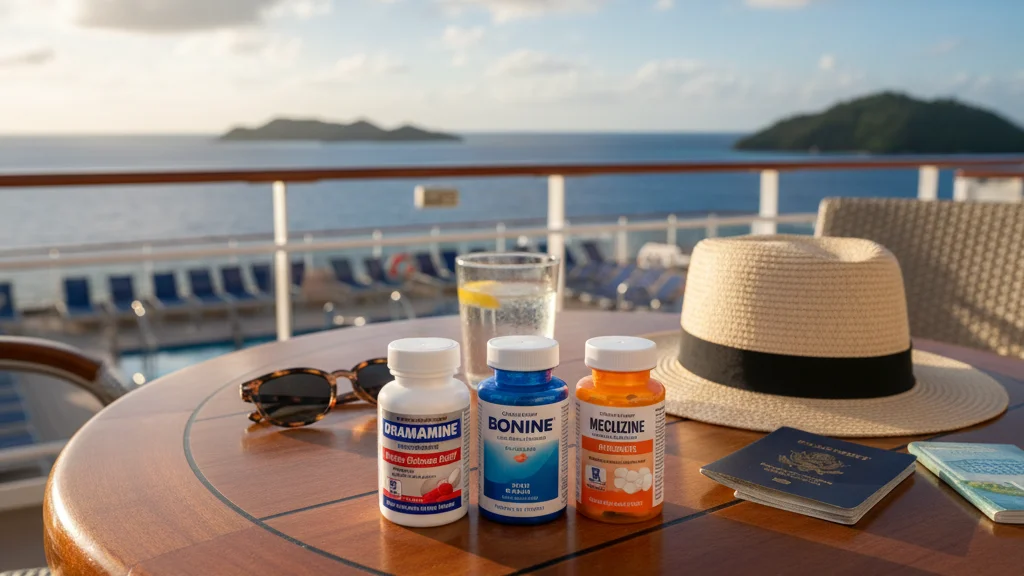
Anyone who has stepped onto a ship and felt the world tilt underneath them knows how quickly seasickness can derail a vacation. For travelers researching their options ahead of a cruise, the bonine vs dramamine debate is one of the most common questions that comes up, and for good reason. Both medications are widely available, both are marketed for motion sickness, and yet they work differently enough that choosing the wrong one can mean hours of unnecessary drowsiness or inadequate relief. This guide breaks down how each medication works, what separates them, and how to make the right call before you board.
How Motion Sickness Happens at Sea
Motion sickness occurs when there is a conflict between what your eyes see and what your inner ear senses. On a cruise ship, your eyes may be looking at a stationary cabin interior while your vestibular system registers constant movement from the waves. That sensory mismatch sends confusing signals to the brain, triggering nausea, dizziness, cold sweats, and vomiting in susceptible people.
Some cruisers are severely affected on rough water. Others feel fine until a storm hits. A small number never experience symptoms at all. Genetics, history of migraines, and even anxiety about seasickness can all influence how strongly a person responds. Understanding your own susceptibility helps determine how aggressively you should prepare and which medication is likely to serve you best.
Dramamine: The Classic Option
Dramamine has been around for decades and is one of the most recognizable names in motion sickness relief. The original Dramamine formula contains dimenhydrinate, an antihistamine that acts on the vestibular system to reduce the signals that trigger nausea and dizziness.
How It Works
Dimenhydrinate works by blocking histamine H1 receptors in the brain. Because histamine plays a role in the vomiting reflex and in transmitting signals from the inner ear, blocking those receptors helps suppress the motion sickness response. It acts relatively quickly, making it useful when symptoms have already started.
The Drowsiness Factor
The most significant downside of original Dramamine is sedation. Dimenhydrinate crosses the blood-brain barrier readily, which is why it works well but also why it causes significant drowsiness in most people. For some travelers, especially those who want to sleep through a rough overnight crossing, this is actually a feature. For those who want to stay alert and enjoy port days, it is a meaningful drawback.
Dramamine also makes a less-drowsy formula that uses meclizine as its active ingredient, which adds to the confusion between these products. When comparing labels in a pharmacy, it is worth checking the active ingredient rather than relying on the brand name alone.
Dosing and Timing
Original Dramamine is typically taken every four to six hours, making it a shorter-acting option that requires more frequent dosing on multi-day cruises. It should be taken before motion sickness begins for best results, though it can offer some relief even after symptoms start.
Bonine: The Lower-Sedation Alternative
Bonine contains meclizine as its active ingredient and is generally considered the preferred option for cruisers who want effective protection without spending their sea days in a fog.
How Meclizine Differs
Meclizine is also an antihistamine and works through the same general mechanism as dimenhydrinate, but it has a lower rate of sedation for most people. The molecular differences between the two compounds affect how readily each crosses the blood-brain barrier, which is why meclizine tends to be less sedating while still providing solid motion sickness control.
Meclizine also has a longer half-life than dimenhydrinate, meaning it stays active in the body for a longer period. Most people take it once a day rather than every four to six hours, which makes it more convenient for cruise travel.
Who Benefits Most from Bonine
Bonine tends to work best for travelers who are moderately susceptible to motion sickness and want to stay functional throughout the day. It is a popular choice for cruisers because the once-daily dosing fits naturally into a morning routine, and the reduced sedation means that snorkeling, shore excursions, and evenings in the dining room remain fully accessible.
For people who are highly sensitive to motion sickness and have had significant symptoms in the past, Bonine alone may not provide enough relief on rough seas. In those cases, combining it with other strategies, such as choosing a mid-ship cabin, wearing acupressure bands, and staying on deck where the horizon is visible, can improve outcomes.
Meclizine vs Dramamine: Understanding the Overlap
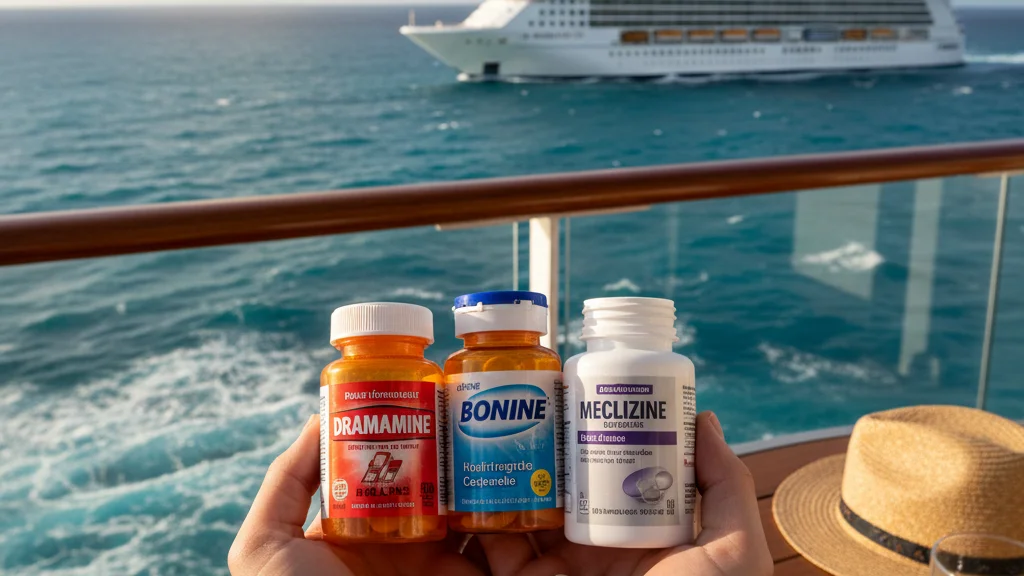
The meclizine vs dramamine comparison is a frequent source of confusion because Dramamine markets both a dimenhydrinate product and a meclizine product under the same brand umbrella. When people ask about dramamine or meclizine, they are often unknowingly comparing two different Dramamine products rather than Dramamine vs a separate brand.
To simplify:
- Original Dramamine = dimenhydrinate = faster acting, more sedating, every 4-6 hours
- Dramamine Less Drowsy = meclizine = same active ingredient as Bonine, once daily, less sedating
- Bonine = meclizine = same active ingredient as Dramamine Less Drowsy
Bonine and Dramamine Less Drowsy are essentially the same medication from a pharmacological standpoint. The differences are in brand packaging, tablet size, and price. Generic meclizine is also widely available at a lower cost and works identically.
Side-by-Side Comparison
Sedation Level
Dimenhydrinate (original Dramamine) causes significant drowsiness in most people. Meclizine (Bonine, Dramamine Less Drowsy) causes mild to moderate drowsiness in some people and minimal sedation in others. Individual responses vary, so it is worth testing your reaction at home before your cruise if possible.
Duration of Action
Dimenhydrinate requires dosing every four to six hours. Meclizine is effective for up to 24 hours with a single dose, making it more practical for all-day use at sea.
Onset of Effect
Dimenhydrinate tends to work somewhat faster than meclizine. If motion sickness has already set in, original Dramamine may offer quicker relief. Meclizine is better suited to prevention taken an hour or more before boarding.
Availability
Both are available over the counter without a prescription in the United States. Generic meclizine is sold at most pharmacies and is often the most cost-effective option.
Practical Tips for Cruise Motion Sickness
Start Before You Board
Both dimenhydrinate and meclizine are more effective as preventive treatments than reactive ones. Taking your chosen medication an hour or two before boarding, rather than waiting until you feel sick, gives it time to reach therapeutic levels before your vestibular system starts sending distress signals.
Cabin Location Matters
Mid-ship cabins on lower decks experience the least motion on most vessels. Bow and stern cabins amplify wave movement. If you are prone to seasickness, cabin selection is as important as medication choice.
Supplement with Non-Medication Strategies
Accupressure wristbands, ginger in various forms, staying hydrated, and keeping your gaze on the horizon can all complement medication. Avoiding alcohol and heavy meals before rough passages also helps. These are not substitutes for medication in people with significant susceptibility, but they reinforce it.
Know Your Body's History
If you have never been on a cruise before, it is difficult to predict how severely you will be affected. Erring on the side of preparation and bringing both a fast-acting option and a once-daily option gives you flexibility based on conditions.
When to Talk to a Doctor
Most healthy adults can use over-the-counter motion sickness medications without issue, but there are situations where a physician's input is worthwhile. People who take sedating medications, antidepressants, or antihistamines for other conditions should check for interactions. Those with glaucoma, prostate issues, or difficulty urinating should be cautious with antihistamines in general.
For travelers with a history of severe motion sickness that over-the-counter options have not controlled, prescription options such as scopolamine patches offer an alternative worth discussing with a provider before the trip.
Planning Ahead with TravelBugHealth
If you are putting together your cruise health kit and want guidance tailored to your itinerary and health history, TravelBugHealth is a resource worth bookmarking. The site covers a wide range of travel health topics, from motion sickness management to vaccination recommendations, and can help you build a preparation plan that matches where you are going and how your body responds to travel stress.
Being prepared before you leave gives you more freedom to enjoy the experience once you are on the water.
FAQ
Is Bonine stronger than Dramamine?
Not necessarily stronger, but different in character. Original Dramamine (dimenhydrinate) acts faster and tends to cause more sedation. Bonine (meclizine) is longer lasting and less sedating. For all-day cruise use, many travelers find Bonine more practical because it does not interfere with alertness the way dimenhydrinate can.
Can I take Bonine and Dramamine together?
Taking both simultaneously is not recommended. Both are antihistamines and combining them increases the risk of side effects including excessive sedation, dry mouth, and blurred vision without meaningfully improving motion sickness control. Stick to one medication at a time and follow the dosing instructions on the package.
How far in advance should I take motion sickness medication before a cruise?
For meclizine (Bonine), taking it one hour before boarding is generally sufficient. For dimenhydrinate (original Dramamine), taking it 30 minutes to an hour before exposure to motion is recommended. If you know rough conditions are likely, starting the night before can help establish a baseline level in your system.
