


COVID-19 travel testing requirements have changed significantly since the pandemic peak, but some countries still require proof of a negative COVID-19 test or vaccination before allowing entry. Travelers from the United States need to check destination rules carefully, as public health guidance varies by region and can shift without much notice.
Where COVID-19 Testing Requirements Still Apply in 2025
As of 2025, most major global destinations have removed mandatory COVID-19 testing at the border. The World Health Organization declared the end of coronavirus disease COVID-19 as a public health emergency of international concern in May 2023, prompting most governments to roll back strict entry requirements. However, testing mandates have not disappeared entirely.
A small number of countries, particularly island nations in the Pacific and certain regions of Southeast Asia, still request a negative COVID-19 test or proof of vaccination for entry. These requirements tend to resurface during periods of elevated SARS-CoV-2 activity or when a new coronavirus variant spreads rapidly. The safest approach is to verify official entry rules for your specific destination at least 30 days before departure.
Regional Variation to Expect
Entry requirements differ not just by country but sometimes by region within a country. A visitor entering through one port may face different documentation checks than someone arriving via a different border crossing. Always consult the official government or embassy website for your destination rather than third-party travel aggregators, which may carry outdated information.
What a Valid COVID-19 Test Document Must Include
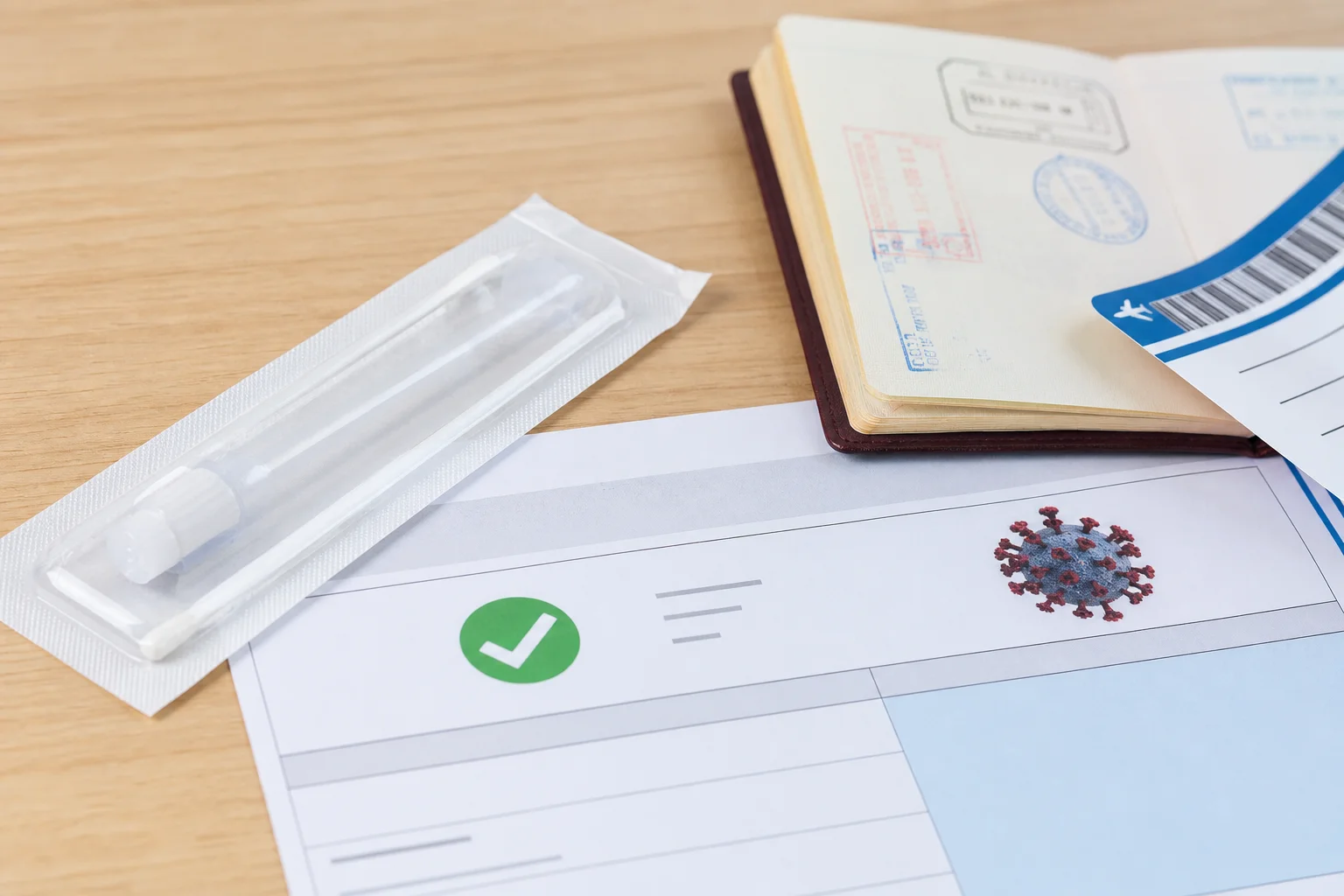
When a COVID-19 test is required, airlines and border authorities typically accept only a formal document, often called a flight certificate, from a licensed healthcare provider or accredited testing laboratory. This document must generally include:
- Your full legal name, matching the passport you are traveling with
- The exact date and time the test sample was collected
- The laboratory name and contact information
- The test type (PCR or antigen)
- A signed, written statement confirming a negative test result
PCR tests are the most widely accepted format because they detect the genetic material of the SARS-CoV-2 virus with high accuracy. Rapid antigen tests may be accepted in some cases but are typically required within 24 hours of departure rather than the 72-hour window most PCR tests allow.
TravelBug Health provides certified test result documentation that meets international carrier requirements.
What the Centers for Disease Control and Prevention Advises
The Centers for Disease Control and Prevention (CDC) publishes destination-specific Travel Health Notices that rate risk from Level 1 (low) to Level 4 (very high). For coronavirus disease COVID-19, the CDC's current guidance focuses on vaccination status and personal precautions rather than mandatory testing, since the global public health emergency of international concern has ended.
Key CDC recommendations for international travelers include:
- Ensuring you are up to date on COVID-19 vaccines before departing.
- Carrying documentation of vaccination, as certain destinations still request proof.
- Self-monitoring for symptoms consistent with coronavirus disease COVID-19, such as fever, cough, fatigue, and shortness of breath, and getting a COVID-19 test before departure if symptomatic.
Travelers returning to the United States no longer face a mandatory negative COVID-19 test requirement at the border. That rule was lifted in 2022 and has not been reinstated.
COVID-19 Vaccines and Booster Timing Before Travel
COVID-19 vaccines remain the most effective tool for preventing severe illness from coronavirus disease COVID-19. Dagan et al., writing in the New England Journal of Medicine in 2021, documented strong vaccine effectiveness against symptomatic coronavirus disease COVID-19 across a large population study in Israel. Updated bivalent boosters targeting more recent SARS-CoV-2 variants are now available and recommended for travelers who may encounter different circulating strains abroad.
Schedule an appointment at TravelBug Health to confirm your vaccination status and receive any recommended boosters or travel vaccines before your trip.
Beyond COVID-19 vaccines, international travel to certain regions may require or strongly recommend vaccinations for yellow fever, typhoid, hepatitis A, and other diseases. A pre-travel consultation ensures you have complete vaccination coverage for your specific destination.
Long COVID and Travel Readiness
Long COVID, referred to clinically as post-COVID-19 condition by the World Health Organization, affects an estimated 10 to 20 percent of individuals after acute SARS-CoV-2 infection, according to a systematic review by Davis et al. published in Nature Medicine in 2023. Persistent symptoms including fatigue, brain fog, and shortness of breath can significantly affect travel capacity.
Travelers recovering from a recent positive COVID-19 test should consult a healthcare provider before booking international flights. Changes in cabin pressure, altitude at tourist destinations, and physical exertion can worsen post-COVID-19 condition symptoms. If you received a positive test result within the past 90 days and are planning international travel, a pre-trip consultation with our travel health team is strongly advised.
Frequently Asked Questions
Do I need a COVID-19 test to fly internationally in 2025?
Most countries no longer require a COVID-19 test for international entry as of 2025. Requirements vary by country and can change on short notice. Check the official embassy or government health authority website for your specific destination at least 30 days before departure, and reconfirm within 72 hours of your flight.
What is a COVID-19 flight certificate?
A flight certificate is an official document from a licensed healthcare provider confirming a negative COVID-19 test result. It includes your full name, test date and collection time, laboratory contact details, and a signed statement. Airlines and border agencies use it to verify compliance with destination entry requirements.
Can I use a rapid antigen test instead of a PCR test for travel?
Some destinations accept rapid antigen tests collected within 24 to 48 hours of departure, but others require a PCR test specifically. Confirm the accepted test type with the destination country's official public health travel guidance before scheduling your COVID-19 test appointment.
Does the United States require a negative COVID-19 test for returning travelers?
No. The United States ended its mandatory negative COVID-19 test entry requirement for returning travelers in 2022. No COVID-19 test is currently required to re-enter the United States from international travel under current CDC and U.S. Customs and Border Protection guidance.
How far in advance should I get a COVID-19 test before flying?
Most destinations still requiring a COVID-19 test specify a collection window of 24 to 72 hours before departure. PCR tests take longer to process than rapid antigen tests, so book your testing appointment at least two to three days before your flight to allow enough time for results.
Whether you need a pre-travel COVID-19 test, updated vaccines, or a full travel health consultation before your next international trip, TravelBug Health is ready to help. Contact us today to get started.
