

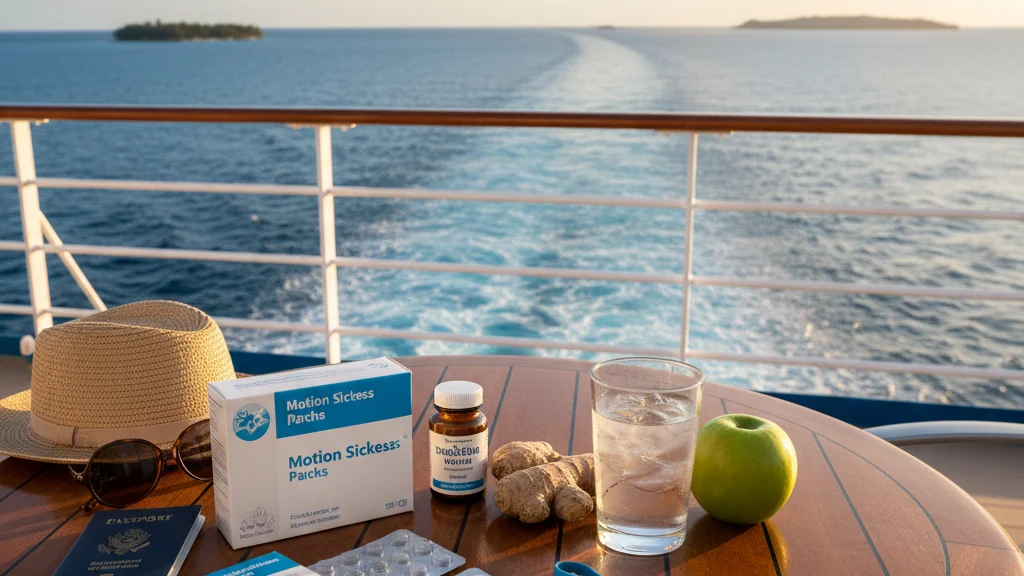
If you have a cruise or open-water sailing trip on the horizon, seasickness is probably on your radar. For many travelers, the motion of the ocean triggers nausea, dizziness, and fatigue that can derail an otherwise perfect trip. Thankfully, seasickness is preventable with the right approach. From seasickness patches to oral medications and natural remedies, you have more options than ever to stay comfortable on the water. This guide breaks down what actually works, how each option differs, and how to choose the right combination for your trip.
What Causes Seasickness?
Seasickness is a form of motion sickness. It happens when your inner ear, eyes, and body send conflicting signals to your brain. Your inner ear senses the rocking motion of the vessel, but your eyes, especially if you are below deck, may register a stationary environment. The brain gets confused, and the result is nausea, sweating, and that unmistakable queasy feeling.
Some people are more prone to it than others, but even experienced sailors can be caught off guard in rough seas. The good news is that most cases can be managed or prevented entirely with the right preparation.
Seasickness Patches: How They Work and Who Should Use Them
Seasickness patches are one of the most popular options for cruise passengers and long-haul boaters. The most widely used type is the scopolamine patch, which is applied behind the ear and delivers medication slowly through the skin over a 72-hour period.
How Scopolamine Patches Work
Scopolamine is an anticholinergic drug that blocks the nerve signals responsible for triggering nausea and vomiting. Because it is delivered transdermally, it maintains a steady level in your system, which is an advantage over pills that may wear off or be harder to take once you are already feeling sick.
Key things to know about scopolamine patches:
- Apply at least 4 hours before boarding, ideally the evening before
- Each patch lasts up to 72 hours
- Wash hands thoroughly after applying to avoid transferring the medication to your eyes
- Common side effects include dry mouth, drowsiness, and blurred vision
- Requires a prescription in many countries, including the United States
People with glaucoma, urinary retention issues, or certain other medical conditions should not use scopolamine. Always consult a healthcare provider before using prescription patches.
Over-the-Counter Patch Alternatives
If you prefer to avoid a prescription, there are non-medicated acupressure options marketed as motion sickness relief, though clinical evidence for these is mixed. They are generally considered safe for most travelers who want a drug-free approach.
Motion Sickness Medicine for Cruise Travelers
For those who prefer oral medications, there are several solid options available. Motion sickness medicine for cruise travelers ranges from antihistamines you can buy at any pharmacy to prescription-strength alternatives.
Dimenhydrinate (Dramamine)
Dimenhydrinate is one of the most recognized over-the-counter motion sickness medications. It works by suppressing the part of the brain that processes motion signals. It is effective for most people, but drowsiness is a frequent side effect. A non-drowsy formula is also available and uses meclizine as the active ingredient instead.
Dosing tips:
- Take 30 to 60 minutes before boarding
- Follow package instructions for repeat dosing
- Avoid alcohol while taking dimenhydrinate, as it intensifies drowsiness
Meclizine
Meclizine is available both over the counter and by prescription at higher doses. It is generally considered to cause less sedation than dimenhydrinate, making it a preferred choice for travelers who need to stay alert. It is taken once a day, which simplifies dosing on longer voyages.
Promethazine
Promethazine is a prescription antihistamine that is highly effective for severe motion sickness. It is often used by cruise medical staff for passengers who are already ill. Because it causes significant drowsiness, it is better suited as a rescue medication than a preventive one for most travelers.
Antihistamine for Travel Sickness: What to Know
Antihistamines are the backbone of most over-the-counter motion sickness treatments. An antihistamine for travel sickness works by blocking histamine H1 receptors in the brain, which helps suppress the nausea response.
The key tradeoff is sedation. First-generation antihistamines like diphenhydramine and dimenhydrinate cross the blood-brain barrier easily, which is why they are effective against motion sickness but also why they make many people sleepy. If you are on a day excursion or need to stay active, the non-drowsy meclizine option is usually a better fit.
Antihistamines commonly used for travel sickness:
- Diphenhydramine (Benadryl) – effective but highly sedating
- Dimenhydrinate (Dramamine original formula) – moderate sedation
- Meclizine (Dramamine Less Drowsy, Bonine) – mild sedation, once-daily dosing
Always read the label and be aware of interactions with other medications you take.
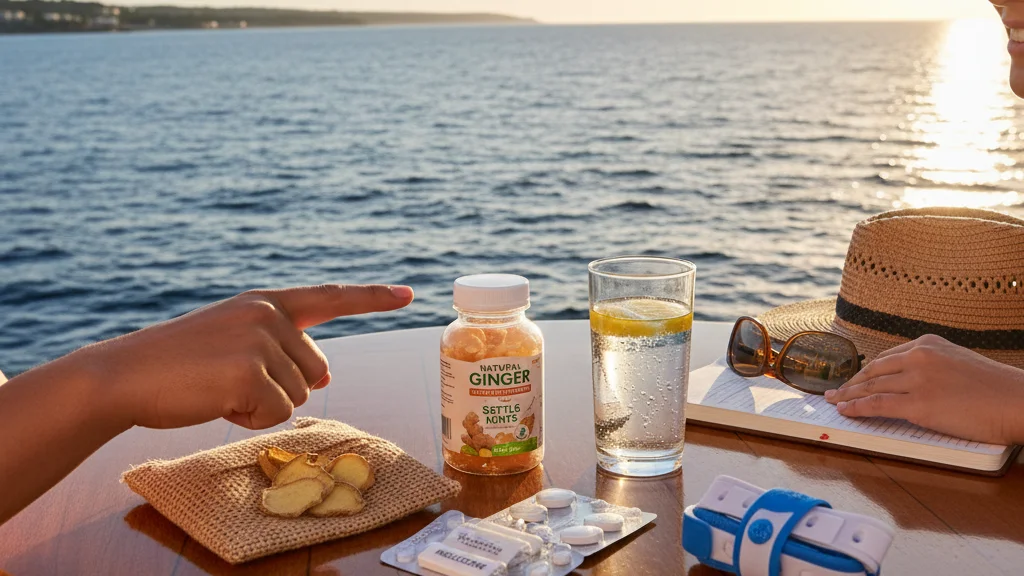
Natural Remedies for Seasickness
Not everyone wants to rely on medication, and some travelers find natural approaches provide enough relief for mild symptoms.
Ginger
Ginger has the most research support of any natural motion sickness remedy. It appears to work by influencing the digestive system rather than the brain, which is a different mechanism than antihistamines. Ginger can be taken as capsules, chews, candies, or tea. It is generally considered safe, though it may interact with blood thinners at high doses.
Acupressure Wristbands
Acupressure wristbands apply pressure to the P6 (Nei-Kuan) point on the inner wrist, which has been used in traditional medicine for nausea relief. Some travelers report significant benefit, while clinical studies show inconsistent results. They are completely drug-free, non-invasive, and worth trying alongside other strategies.
Behavioral Techniques
Beyond supplements and devices, how you position yourself matters. On a ship, aim for a cabin in the middle of the vessel at a lower deck level, where motion is least pronounced. Fix your gaze on the horizon rather than reading or looking at a screen below deck. Fresh air often helps, and staying hydrated reduces overall vulnerability.
Combining Approaches for Best Results
For most travelers taking a cruise or long ocean voyage, a layered strategy works better than relying on a single method.
A reasonable protocol for a cruise trip might look like:
- Apply a scopolamine patch the night before departure (if prescribed and appropriate for you)
- Pack meclizine as a backup oral option
- Bring ginger chews for mild symptoms between doses
- Choose a mid-ship, lower-deck cabin when possible
- Stay on deck and keep your eyes on the horizon during rough patches
If you have never experienced severe seasickness before, starting with an OTC antihistamine is a sensible first step. If you have had bad experiences in the past, talk to a travel medicine provider before your trip to discuss prescription options.
When to See a Doctor Before You Travel
Consult a healthcare provider before your trip if:
- You have a history of severe motion sickness that has not responded to OTC medications
- You are pregnant or nursing
- You take other medications that may interact with anticholinergic drugs or antihistamines
- You have underlying conditions like glaucoma, prostate issues, or cardiac conditions
A travel medicine clinic can prescribe the right option and give you dosing guidance tailored to your itinerary.
TravelBugHealth: Your Resource for Travel Wellness
Preparing for a cruise or ocean voyage goes beyond packing the right sunscreen. TravelBugHealth offers trusted guidance on travel health topics like motion sickness prevention, vaccinations, altitude sickness, and more. Before your next trip, check TravelBugHealth at travelbughealth.com for practical, evidence-based advice that helps you travel smarter and feel your best from the moment you board.
Frequently Asked Questions
How far in advance should I apply a seasickness patch?
Scopolamine patches should be applied at least 4 hours before you expect to be in motion, but many providers recommend putting it on the night before your departure for best results. This gives the medication time to build up in your system before the motion stimulus begins.
Can I take Dramamine and use a seasickness patch at the same time?
Combining multiple anticholinergic or sedating medications increases the risk of side effects like excessive drowsiness, confusion, and dry mouth. You should not combine a scopolamine patch with dimenhydrinate or other antihistamines without guidance from a healthcare provider. If your patch alone is not providing enough relief, consult a doctor before adding another medication.
Are natural remedies like ginger effective enough for a long cruise?
For mild to moderate susceptibility, ginger and acupressure can provide meaningful relief and are worth using alongside other precautions. For a multi-day ocean voyage or if you have experienced significant seasickness before, most travel health providers recommend pairing natural remedies with a proven medical option rather than relying on natural remedies alone.
