


Typhoid Risk in India: Injectable vs. Oral Vaccine (Vivotif) for Travelers
Typhoid Risk in India: How Travelers Can Choose Between Injectable and Oral Vaccines
If you’re traveling to India, typhoid is an important health risk to consider. Typhoid, caused by Salmonella typhi, spreads through contaminated food and water and can be serious. This guide explains why getting vaccinated against typhoid matters for travelers and compares the two main options: the inactivated injectable vaccine and the live oral vaccine. Both lower your risk but don’t give complete protection, so vaccination should be paired with careful food and water practices. Below we cover typhoid risk in India, vaccine effectiveness and differences, and practical prevention steps before and during your trip.
What Is the Typhoid Risk for Travelers Visiting India?
India accounts for a large share of the world’s typhoid cases, so travelers face a meaningful risk—especially in areas with poor sanitation. Typhoid is spread via contaminated food or water, and vaccination is recommended for travelers to high-risk areas, particularly if you’ll stay for a long time or eat from local vendors. Two vaccine options are available: an injectable vaccine that protects for about two years and an oral vaccine that generally lasts around five years.
Research highlights the heavy global burden of typhoid and cholera in regions where sanitation and water systems are compromised—conditions that increase transmission risk in places like India.
Typhoid Burden, Transmission & Traveler Prevention in India
Global diarrhoeal disease burden is substantial, with estimates ranging from 1.7 to 5 billion cases per year. Typhoid fever (TF) and cholera are life‑threatening infections primarily spread by consuming food or water contaminated with feces or urine from infected individuals. TF is caused by Salmonella typhi; cholera by toxin-producing Vibrio cholerae. These illnesses disproportionately affect low‑ and middle‑income countries where overcrowding, poor water and sanitation, conflict, or disasters have undermined public health infrastructure. Mortality is highest among children under five. Geographically, TF shows high incidence in sub‑Saharan Africa, India and southeast Asia, while cholera peaks in selected African regions, such as the Horn of Africa.
Burden of typhoid fever and cholera: similarities and differences. Prevention strategies for European travelers to endemic/epidemic areas, D Amicizia, 2019
Which Areas in India Have the Highest Typhoid Incidence?
Certain states report higher typhoid incidence, particularly where safe water and sanitation are limited. Parts of Uttar Pradesh, Bihar and West Bengal have reported elevated case counts. If you’ll visit these areas, take extra precautions and discuss vaccination with a travel health provider.
Clinical and surveillance data confirm that enteric fever—mainly from Salmonella enterica serovar Typhi and an increasing share from S. paratyphi A –remains a persistent public health challenge across India, worsened by rising antimicrobial resistance.
Typhoid Fever Epidemiology and Vaccination in India
Hospital studies and outbreak reports across India show enteric fever is a major public‑health issue, withS. typhi as the leading cause and an increasing contribution from S. paratyphi A. Risk factors—poor sanitation, unsafe drinking water and low socioeconomic conditions—are compounded by the emergence of multidrug‑resistant Salmonella strains with reduced susceptibility to fluoroquinolones. Reported treatment failures have been linked to higher morbidity and mortality. Vaccination programs should be carefully planned and targeted to vulnerable groups to reduce disease burden.
Epidemiology of typhoid and paratyphoid fever in India, S Kanungo, 2008
How Effective Are Oral and Injectable Typhoid Vaccines for India Travel?
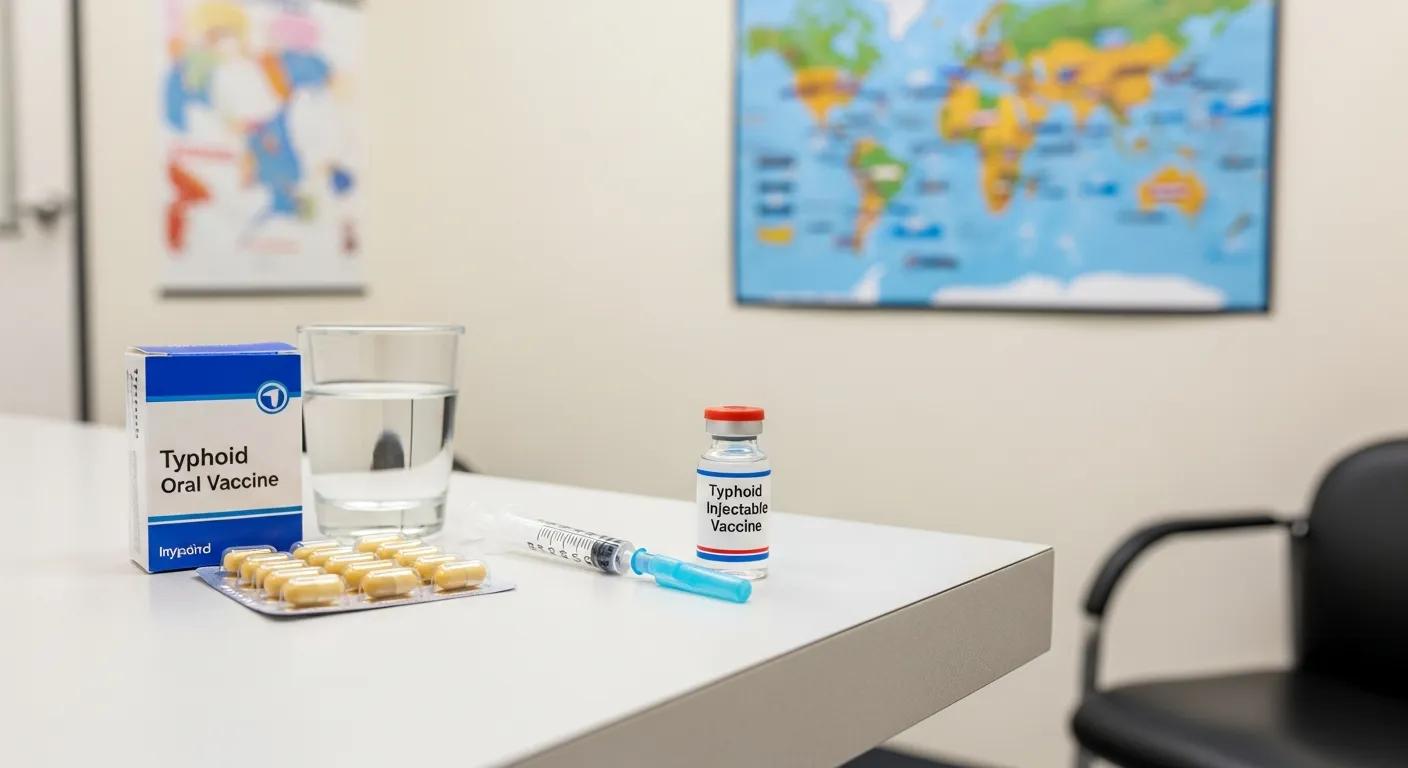
Both oral and injectable typhoid vaccines reduce the chance of infection while traveling in India, but neither is 100% protective. The injectable vaccine typically protects for about two years; the oral vaccine generally provides protection for around five years. For best effectiveness, pair vaccination with strict food and water hygiene while abroad.
What Is the Effectiveness of the Vivotif Oral Typhoid Vaccine?
The Vivotif oral vaccine (live attenuated Ty21a) is an effective prevention tool and usually provides protection for about five years. It requires taking doses on a specific schedule, so follow the recommended regimen to maximize protection. As with all vaccines, combine it with careful food and water precautions when traveling.
The Vivotif oral vaccine, based on the live Ty21a strain, is recognized as an effective preventive option that mimics natural infection to build protection against typhoid.
Typhoid Fever: Traveler Risk & Oral Ty21a Vaccine
Typhoid fever is a leading cause of diarrhoeal illness and can be life‑threatening. It predominantly affects people traveling to endemic areas in low‑ and middle‑income countries. Prevention is essential, and vaccination is an effective measure. Vivotif® is an oral live‑attenuated vaccine containing a mutated Ty21a strain of Salmonella that stimulates protective immunity by reproducing aspects of natural infection.
Overview of the impact of Typhoid and Paratyphoid fever. Utility of Ty21a vaccine (Vivotif®), D Amicizia, 2017
How Effective Is the Injectable Typhoid Vaccine Typhim Vi?
The Injectable typhoid vaccine – Typhim Vi generally provides about two years of protection. It is given as a single shot and is usually very well tolerated. Because no vaccine is perfect, combining vaccination with safe food and water habits offers the most reliable protection. A travel health specialist can help you choose the best option for your itinerary and health history.
What Are the Key Differences Between Oral and Injectable Typhoid Vaccines?
Here are the main differences between the two vaccine types:
- Type: The injectable vaccine is an inactivated Vi capsular polysaccharide vaccine; the oral vaccine is live and attenuated.
- Administration: The injectable version is a single shot; the oral vaccine requires multiple doses spread over several days (commonly four doses across seven days).
- Duration of Protection: Injectable protection typically lasts about two years; the oral vaccine generally lasts up to five years.
- Storage and Use: The oral vaccine must be refrigerated, taken on an empty stomach, and should not be given at the same time as antibiotics or acid‑blocking medications. The injectable vaccine has no such restrictions.
Your travel health specialist can advise which vaccine fits your age, health status and travel plans.
How Do Dosage and Administration Differ Between Vivotif and Injectable Vaccines?
What Are the Side Effects and Contraindications of Each Vaccine Type?
Side effects are generally mild. Injectable vaccines may cause soreness at the shot site, mild fever or fatigue. The oral vaccine can cause gastrointestinal upset, such as nausea or abdominal pain. Anyone with known allergies to vaccine components, or who is immunocompromised, should speak with a healthcare provider before vaccination. The oral vaccine is not recommended for immunocompromised people or pregnant women.
How Can Travelers Best Prevent Typhoid Beyond Vaccination?
Vaccination lowers your risk, but food and water precautions are essential. Combine both strategies to maximize protection while traveling.
What Food and Water Safety Practices Reduce Typhoid Risk in India?
To reduce your typhoid risk in India, follow these practical steps:
- Try to avoid street food unless it is well cooked: Food sold from most street vendors may not meet hygiene standards.
- Drink only bottled or boiled water: Use sealed bottled water or boiled water for drinking and brushing teeth.
- Eat fruits and vegetables you can peel: Peeling reduces the chance of ingesting contaminated surfaces.
For travelers with prolonged exposure to local food and water, vaccination is especially recommended.
Why Choose Travel Bug Health for Your Typhoid Vaccine and Consultation?
Travel Bug Health offers a full range of routine and travel vaccines and can administer both injectable and oral typhoid options. Our clinicians will review your itinerary and health history, explain the pros and cons of each vaccine, and recommend the best plan to lower your risk before you go.
