


Applying for a visa abroad often means gathering specific vaccines and medical documents you need for a travel visa, from a complete vaccination record to signed health forms. Whether you are pursuing an immigrant visa or a long-stay permit, our Travel Clinic walks Arizona residents through every requirement well before the embassy appointment.
By TravelBug Health Team, Travel Health Specialists
Many countries require applicants to prove vaccination against communicable diseases before granting entry, a long-stay permit, or permanent residency. These vaccination requirements protect public health at the destination country and align with international health regulations published by the World Health Organization.
Identifying the vaccines and medical documents ahead of time that you need for a travel visa is especially important when multi-dose vaccine series are required, since some schedules span several months. Family members traveling on the same immigrant visa application may face identical vaccination requirements, so confirm the full list for your household before your first clinic visit.
For an immigrant visa to the United States, applicants must complete a medical examination with a designated panel physician – an embassy-authorized doctor who reviews vaccination records, checks for communicable conditions, and submits sealed results directly to the consulate. For other countries, requirements vary by destination and visa category, but the pattern is consistent: prove you are protected against the diseases on that country's required immunization schedule.
Even non-immigrant visas for countries in sub-Saharan Africa and parts of South America may require proof of yellow fever vaccination for eligible travelers. Knowing which documents you need before you arrive at the embassy window can save weeks of rescheduling.
The Role of a Panel Physician in U.S. Immigrant Visa Applications
A panel physician is a doctor designated by the U.S. Department of State or an equivalent foreign embassy authority to conduct official immigration medical examinations. The exam typically covers:
- Physical examination, assessing general health status, vision, and hearing
- Blood tests, including syphilis serology and other communicable disease screenings per destination country requirements
- Chest X-ray, used for tuberculosis screening for applicants above a certain age
- Vaccination review, confirming that all required immunizations are current and documented in your vaccination record
The Centers for Disease Control and Prevention publishes the vaccination requirements that panel physicians must follow for immigrant visa applicants. These guidelines are updated as new vaccines receive ACIP approval. For more information, the CDC's Immigrant, Refugee, and Migrant Health page lists current immunization standards by visa category.
Vaccines Commonly Required for Visa Medical Exams
The specific vaccines depend on the destination country and the applicant's age. The following appear most often in visa medical requirements, according to the Centers for Disease Control and Prevention:
- MMR (Measles, Mumps, Rubella), two doses required for most applicants
- Varicella, proof of two doses or laboratory evidence of immunity
- Hepatitis A and Hepatitis B, routinely required across most age groups
- Influenza, for applicants 6 months through 18 years and adults 65 and older
- Tdap, covering tetanus, diphtheria, and pertussis
- Pneumococcal, for older applicants and those with qualifying conditions
- Meningococcal, for college-aged applicants and travelers to high-risk regions
- Respiratory syncytial virus RSV, the syncytial virus RSV vaccine is a newer addition to immunization schedules for adults 60 and older; ask your specialist whether it applies to your age group
Yellow fever vaccination may be required for eligible travelers entering or transiting certain countries. A single dose confers lifelong protection per WHO 2016 guidance. Vaccines given overseas must be documented on certified translation forms acceptable to the panel physician.
Travelers heading to sub-Saharan Africa should expect additional immunizations beyond the standard visa panel, a topic the Africa travel vaccine tips page covers in more depth. European itineraries carry their own seasonal vaccine considerations that vary by destination, detailed in Europe vaccine requirements.
What Your Vaccination Record Must Include
A vaccination record, sometimes called an immunization history or shot record, must contain specific fields to satisfy a panel physician or consular officer. An incomplete vaccination record can delay your visa appointment or require you to repeat doses already received.
Your vaccination records should show:
- Full legal name and date of birth, matching your passport exactly
- Vaccine name, including the trade name and specific antigen (for example, Engerix-B for hepatitis B)
- Lot number, required by most panel physicians as proof the documented dose was administered
- Date of each dose, listed by day, month, and year
- Administering provider's name and signature, confirming who gave the vaccine
- Clinic address and contact information
If you received vaccines in another country, have them translated and certified before your exam. The content of a foreign vaccination record must match the fields above to be accepted by the panel physician.
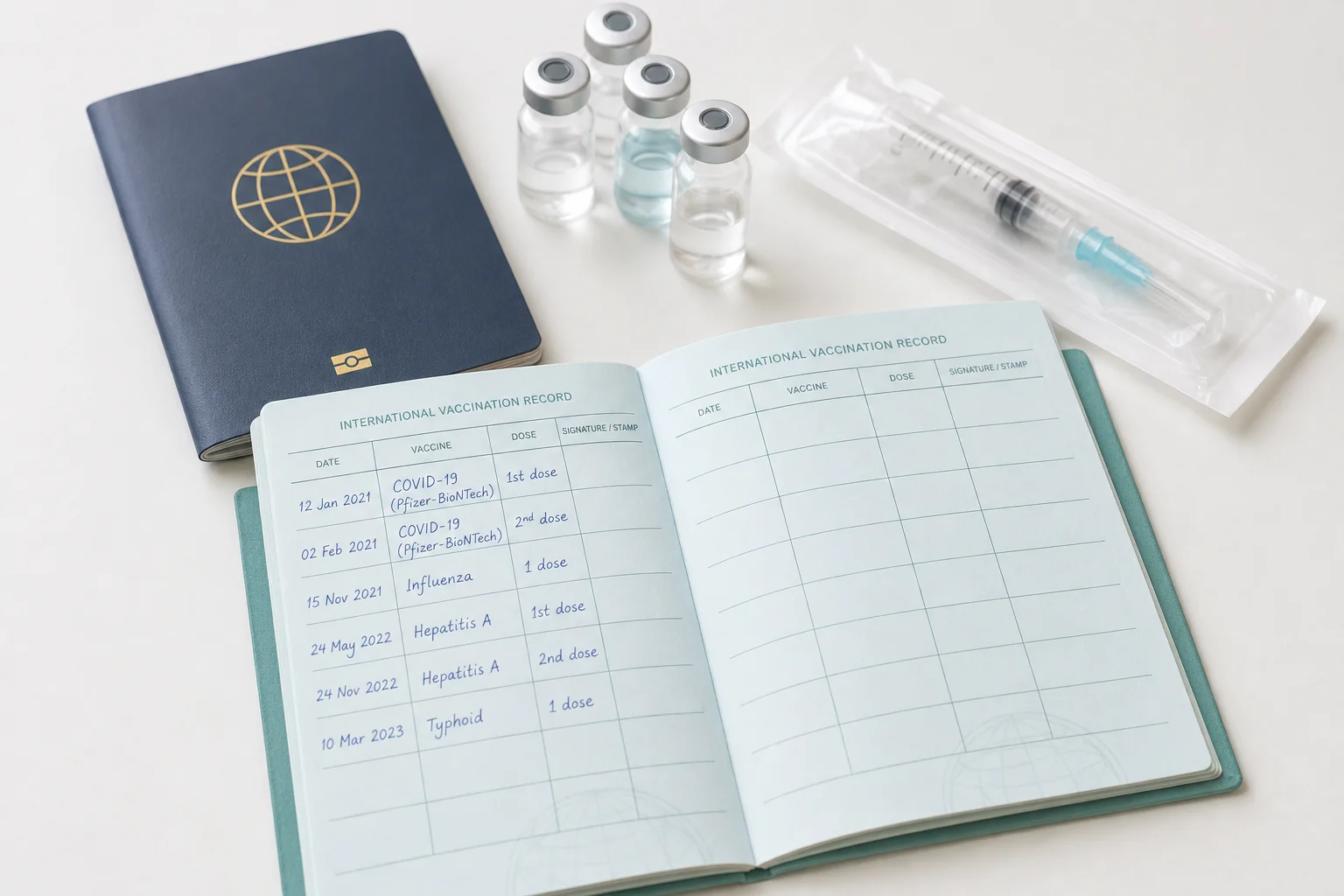
If your vaccination records are incomplete, our team can review your history, order titer tests to confirm immunity, and administer any missing doses. Visit our Vaccinations page for a full list of immunizations available at the Scottsdale clinic. The CDC recommends reviewing your childhood immunization history at least 8 weeks before any panel physician appointment.
Additional Health Documents Consulates May Request
Beyond vaccination records, many visa categories require supporting health paperwork. Health care providers at embassy-designated facilities prepare these documents alongside the standard vaccine review.
Chest X-Ray Results
Applicants for immigrant visas above a specific age threshold typically submit a chest X-ray to screen for tuberculosis. The panel physician interprets the results and includes them in the sealed health form submitted to the consulate.
Blood Work Summaries
Syphilis serology and, for some visa categories, HIV test results must accompany the exam. These results go directly from the panel physician to the consulate, so applicants generally do not handle the documents independently.
Health Declaration Forms
Many countries require applicants to complete official health declaration forms as part of the visa package. These forms document vaccination status, prior medical history, and communicable disease screening results. TravelBug Health assists travelers in completing the medical paperwork and forms required for international visa applications, ensuring the right information appears in the correct fields.
Frequently Asked Questions
What vaccines and medical documents do you need for a travel visa?
Most immigrant visa medical exams require MMR, varicella, hepatitis A, hepatitis B, influenza, Tdap, meningococcal, and pneumococcal immunizations. You also need a complete vaccination record with lot numbers, dose dates, and provider signatures, plus a physical exam and required blood work completed by a designated panel physician. Exact requirements vary by destination country.
What is a panel physician, and why must I use one?
A panel physician is a doctor designated by an embassy or consulate to conduct official immigration medical examinations. Their signed health form carries legal authority for the visa application; a regular primary care visit cannot substitute. The United States requires panel physicians for immigrant visa medical exams completed overseas, and many other countries follow the same model.
How far in advance should I get travel vaccines before a visa exam?
Book your appointment at least 8 to 12 weeks before your panel physician exam date. Some vaccines, such as the hepatitis B series, require doses spaced across several months. Starting early ensures all required doses are complete and properly recorded in your vaccination record before your embassy appointment.
Does TravelBug Health help complete visa health paperwork?
Yes. Our specialists assist travelers in completing the medical paperwork and forms required for international visa applications. We do not perform USCIS civil surgeon exams or Form I-693 adjustments, but we prepare immunization documentation and health declaration forms for embassy-directed reviews. Reach out to our team with questions about your specific visa category.
Where do I find the official vaccination requirements for my destination?
The Centers for Disease Control and Prevention (CDC) maintains a traveler health database at cdc.gov/travel listing immunization recommendations by country. CDC technical instructions detail which vaccines satisfy each visa category's medical requirements. Also check the destination country's embassy website, since some countries post their own vaccination requirements separately from the CDC database.
Plan Your Pre-Visa Health Visit at Our Scottsdale Clinic
Your embassy appointment date is fixed, and the paperwork list is longer than expected. Our travel health specialists review your vaccination records, identify gaps, administer any missing immunizations, and help you complete the required health forms for your visa application, all in one visit. Schedule an Appointment today and arrive at your panel physician exam with every document ready.
