

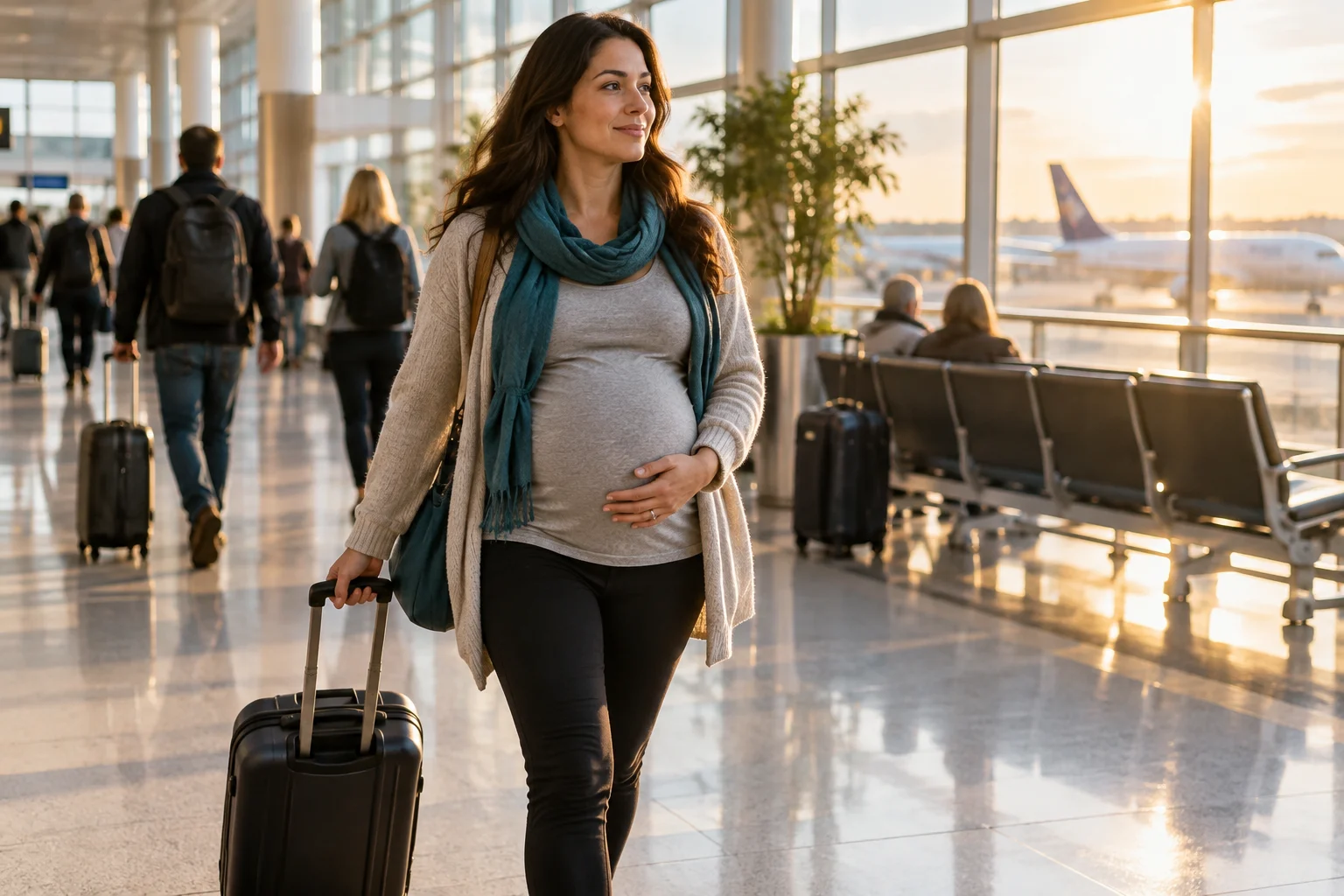
Traveling while pregnant is safe for most pregnant women with a healthy, uncomplicated pregnancy, though timing, vaccines, and a few precautions make the difference between an uneventful trip and a stressful one. Before you book flights, a review of your vaccinations and travel timing can help you plan a safer trip.
By TravelBug Health Team, Travel Health Specialists
For most pregnant women with a low risk, uncomplicated pregnancy, air travel and international trips are generally considered safe. The American College of Obstetricians and Gynecologists (ACOG) notes that occasional air travel is unlikely to cause complications for a healthy pregnancy, though ACOG also recommends discussing any trip with your obstetrician first, especially if you have a history of preterm labor, preeclampsia, or other pregnancy complications.
The bigger variables are usually the destination, not the pregnancy itself. A trip that requires several vaccines, a long flight, or travel to an area with limited medical care requires more planning than a short domestic trip. We generally recommend pregnant travelers schedule a pre-travel consultation early, since some vaccines are safe to give during pregnancy and others are not, and your itinerary determines which ones actually apply to you.
Vaccines That Are Safe to Get While Pregnant
Inactivated vaccines, meaning vaccines that do not contain a live virus, are generally considered safe during pregnancy. The inactivated influenza vaccine is recommended for pregnant women during flu season, since pregnancy changes how the immune system responds to respiratory illness. Tdap (tetanus, diphtheria and pertussis) vaccine is also recommended during every pregnancy, usually given in the early third trimester, so the baby receives some passive protection against pertussis (whooping cough) before their own vaccinations begin. It's worth confirming that your Tdap booster is current, since protection from the pertussis component of the vaccine can wear off in as little as 2-4 years.
Hepatitis A and hepatitis B vaccines, which are also inactivated, may be recommended depending on your destinations and prior vaccination history. A travel health specialist at our Scottsdale Travel Clinic reviews each traveler's individual itinerary, pregnancy and health history to personalize recommendations to your specific situation.
Yellow Fever Vaccine Safety During Pregnancy
Yellow fever vaccine is a live vaccine and is generally avoided during pregnancy unless travel to a high risk area cannot be postponed or avoided. A single dose administered usually provides lifelong protection for most travelers. Because the vaccine carries its own risks during pregnancy, a travel health specialist reviews your health history, your itinerary, and your trimester together as part of a risks versus benefits discussion before recommending it.
Vaccines to Avoid While Pregnant
Live vaccines are generally avoided during pregnancy because they contain a weakened form of the virus or bacteria. MMR vaccine (measles, mumps, and rubella) is a live vaccine and is not given during pregnancy; if you need it, your specialist typically recommends completing it before conception or waiting until after delivery. The oral typhoid vaccine (Vivotif®) is also live and is generally avoided. The injectable typhoid vaccine (Typhim Vi®), which is inactivated, is a safe alternative.
The vaccine list isn't the whole picture. We also compare your due date with your travel dates, since timing changes which precautions make the most sense at each stage of pregnancy.
The Second Trimester Is Usually Best for Traveling While Pregnant
Many obstetricians consider the second trimester, roughly weeks 14 through 27, the safest and most comfortable window for travel. Early pregnancy symptoms like nausea and fatigue have usually eased, energy levels tend to be higher, and the risk of pregnancy loss and preterm labor is lower than in the first or third trimester.
Travel earlier in pregnancy, during the first trimester, isn't off limits, but morning sickness and fatigue can make a packed itinerary less enjoyable. Later, in the third trimester, airlines start to apply their own restrictions, and the risk of going into labor far away from your regular care team increases the closer you approach your due date. If your travel plans are flexible, planning around the second trimester usually makes for the most comfortable trip.
Destinations to Reconsider During Pregnancy
Certain destination factors are especially important during pregnancy. The three we flag most often are limited access to emergency obstetric care, malaria risk, and active Zika transmission.
Travel to Malaria-Endemic Regions
Travel to malaria-endemic regions increases risk during pregnancy because pregnancy can make malaria more severe, and not every antimalarial medication is recommended during pregnancy. Chloroquine is an option in the few areas where the parasite hasn't developed resistance to it, but for most malaria endemic destinations the choice of medication depends on your trimester and health history, which is exactly the kind of decision we work through at a consultation instead of just making generalized recommendations.
Zika Risk Countries Need Extra Caution
Zika virus spreads mainly through the bite of an infected mosquito but can also be acquired from sexual contact with someone (usually a partner traveling to the same destination) who has acquired Zika. A traveler, or their partner can be infected with the Zika virus without having any noticeable symptoms. If a woman is infected with Zika during pregnancy, the virus can cause serious birth defects, including microcephaly. The CDC tracks areas with active Zika transmission and generally recommends that pregnant women postpone non-essential travel to those areas. If travel to a Zika risk area can't be avoided, strict mosquito bite prevention (insect repellent, long sleeves, and screened or air conditioned lodging) becomes the main line of defense, since there is currently no vaccine against Zika.
Flying While Pregnant: Airline Rules and Blood Clot Prevention
Air travel is generally considered safe for uncomplicated pregnancies, but a few things change once you're in the air. Most US domestic airlines allow pregnant travelers to fly up to around 36 weeks, while international airlines often set an earlier cutoff, sometimes as early as 28 to 35 weeks, and some airlines request documentation once you're in your third trimester. Because these rules vary, check the airline's specific policy before you book, especially for international carriers.
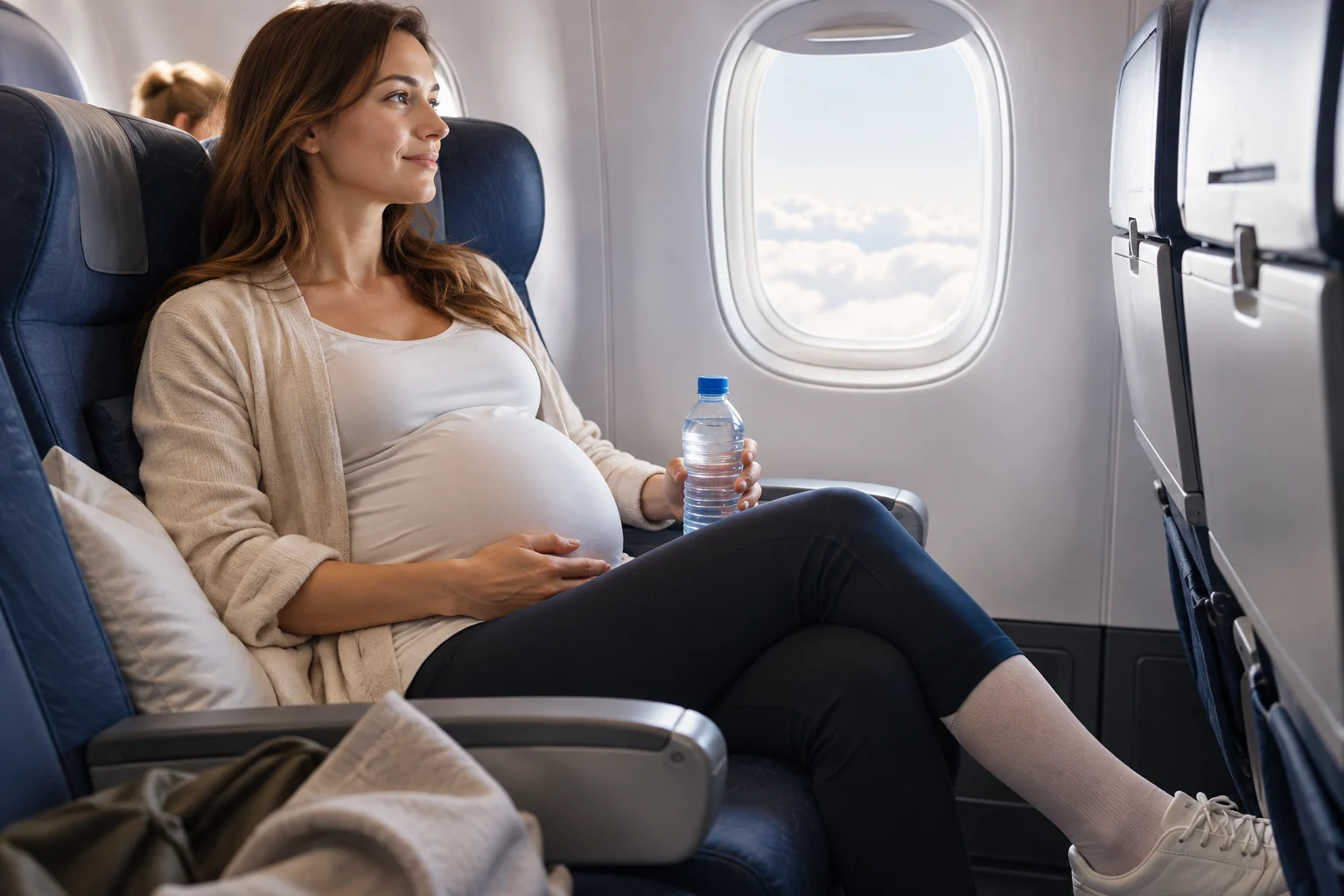
The risk of blood clots increases during pregnancy, including deep vein thrombosis (DVT), a clot that forms in a deep vein, usually in the leg. Sitting still during a long flight adds to the risk already associated with pregnancy, as both can slow blood flow through the legs. To lower the risk during air travel, we recommend getting up and walking the aisle every hour or two, flexing your ankles while seated, drinking water to stay hydrated, and wearing compression stockings on flights over four hours. Make sure to mention any personal or family history of blood clots to your OB before you fly, since that history can change the recommendation.
Travel Insurance and Your Pregnancy Travel Health Kit
Travel Insurance for Pregnant Travelers
Pregnancy is unpredictable enough that a standard trip cancellation plan may not be enough. Pregnant travelers should have an insurance plan that covers pregnancy related medical care abroad as well as medical evacuation, since coverage for pregnancy complications isn't automatically included with every policy. Read the policy's pregnancy exclusions closely before you leave, since plans differ on how they treat later trimesters and pre-existing conditions, and confirm the details directly with the insurer.
Packing a Travel Health Kit for Pregnancy
Your travel health kit doesn't need to be complicated and should include band-aids, antibiotic ointment, sunscreen and a small supply of the over-the-counter medications approved by your OB. Don't forget insect repellant if you're headed somewhere with a risk of mosquito-borne diseases. Bring your prenatal vitamins, a copy of your prenatal records with your due date, and a spare pair of compression stockings for the flight. Common items like sunscreen and basic pain relievers are often easy to find at your destination.
Frequently Asked Questions
Do you need a doctor's note to travel while pregnant? Many airlines require documentation after a certain point in the third trimester, usually confirming your due date and that you're cleared to fly. That note should come from your OB or prenatal care provider, not from a travel clinic, and the exact wording required varies by carrier.
How many weeks pregnant can you fly on a plane? Most US domestic airlines allow flying up to around 36 weeks, while international airlines often set an earlier limit, sometimes 28 to 35 weeks. Check the specific airline's policy well before you book, especially for international travel.
Is the yellow fever vaccine safe during pregnancy? Yellow fever is a live vaccine, so it's generally avoided during pregnancy unless travel to a high risk area can't be postponed. This is a decision to make along with a travel health specialist who reviews your itinerary, trimester, and health history.
Can pregnant women travel to Zika risk countries? The CDC generally recommends postponing non-essential travel to areas with active Zika transmission, since Zika can cause serious birth defects. If travel can't be avoided, strict mosquito bite prevention becomes essential, since there is currently no vaccine against Zika.
Plan Your Pregnancy Travel Consultation in Scottsdale
A pre-travel consultation gives you and your specialist time to sort out which vaccines fit your trimester, your itinerary, and your due date. Just like the CDC, we recommend scheduling a pre-travel consultation at least 6 to 8 weeks prior to departure. That leaves time to complete any multi-dose vaccine series. Schedule an Appointment at our Scottsdale clinic, or find your nearest option at our Phoenix Travel Clinic.
