


Family travel vaccines tailored to each child's age and destination shield your family from diseases that standard immunizations never cover. Whether you are heading to yellow fever zones in sub-Saharan Africa or japanese encephalitis-endemic areas in Southeast Asia, starting early is the best way to make sure every family member is protected before takeoff. Our Travel Clinic builds personalized immunization plans for Arizona families.
By TravelBug Health Team, Travel Health Specialists
Why International Travel Demands More Than Your Child's Routine Vaccines
Children who are current on their school-required immunizations still lack protection against many diseases common in other parts of the world. Typhoid fever, Japanese encephalitis, yellow fever, and cholera are not included in the standard United States childhood immunization schedule, yet these illnesses are genuine risks in many regions families want to explore.
Besides preventing disease, some vaccines may be legally required to cross borders in specific countries. Yellow fever certification is the most widely known requirement, but some African nations require proof of a polio vaccine prior to onward travel. Understanding which vaccines are required versus which are strongly recommended helps parents prioritize and plan appointments without last-minute stress.
A 2019 review by researchers Leder and Steffen, published in the journal Travel Medicine and Infectious Disease, found that children make up one of the fastest-growing segments of the international travel population and are consistently under-vaccinated compared to adult co-travelers. Booking a dedicated travel health consultation closes that gap well before departure.
Core Family Travel Vaccines Every Parent Should Discuss
Planning your family's international health protection starts with a comprehensive consultation at a qualified travel health clinic. The following vaccines are important for families traveling beyond Western Europe, Canada, Australia, Japan, and other destinations where disease burden is lower.
Hepatitis A
Hepatitis A spreads through contaminated food and water, and significant risk exists in popular family destinations across South Asia, Latin America, and Africa. The two-dose series, given six months apart, can be given after 12 months of age and confers lifelong protection. Hepatitis A immunization is included in the standard childhood vaccination schedule here in the U.S., but should always be confirmed since hepatitis A is one of the most common vaccine preventable diseases in the world, and among international travelers.
Typhoid Fever
Typhoid remains common across South Asia, Southeast Asia, sub-Saharan Africa, and parts of Latin America. Your specialist will recommend the injectable vaccine (approved for ages 2 and older) or the oral capsule series (ages 6 and older) based on your child's age, health history, and departure date. Both formulations require at least 2 weeks before travel to reach full effectiveness. The oral typhoid vaccine is a live vaccine, and requires refrigeration and very specific dosing instructions, which are often overlooked by pharmacists or general practitioners.
Hepatitis B
Many children in the United States complete the hepatitis B series in early childhood, but completion of the series is not universal. If records are incomplete, finishing the course before travel protects against bloodborne exposure from medical procedures or injuries abroad. Your travel health specialist will review your child's vaccination history and fill any gaps.
Meningococcal Protection
The quadrivalent MenACWY vaccine is recommended for travelers heading into sub-Saharan Africa's meningitis belt, particularly during the dry season of December to June. Children traveling with their families to visit friends and family in Africa are also at increased risk. Teens and college-age travelers who plan study abroad or live in group settings face elevated risk and benefit most from early protection.
To explore the full range of options for your destination, our Vaccinations page gives you a starting overview to review before your clinic appointment.
Yellow Fever Vaccine and Japanese Encephalitis: Critical Protection for Endemic Regions
Two vaccines stand apart from the rest because of their destination specificity and the seriousness of the diseases they prevent.
Yellow Fever
A single dose of the yellow fever vaccine delivers lifelong protection with no routine booster required. Because this live-attenuated vaccine carries a small risk of rare but serious adverse events in some individuals, our specialists conduct a risk-benefit discussion with each eligible traveler before administration. Children under nine months are generally excluded from yellow fever vaccination.
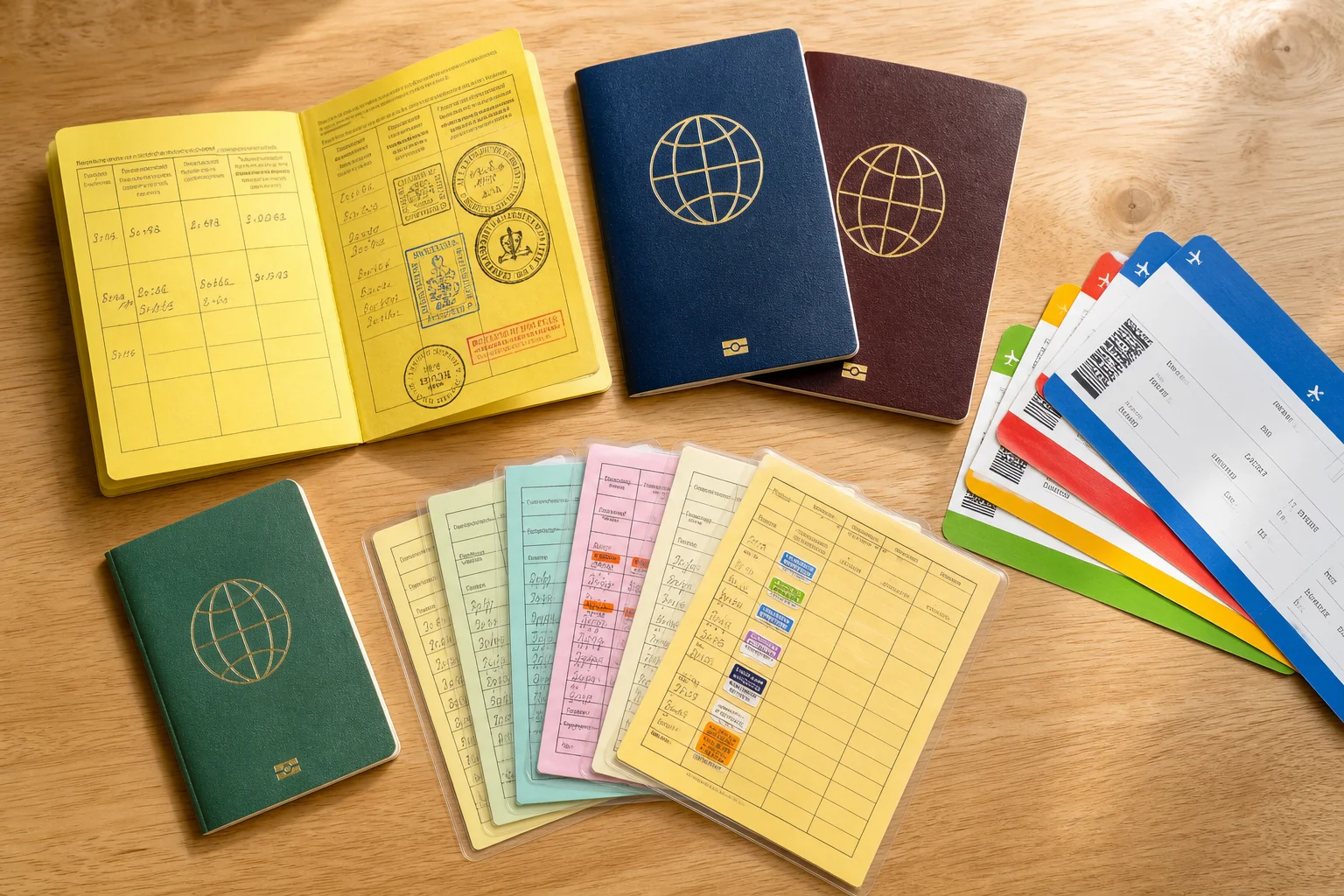
After vaccination, TravelBug Health issues the International Certificate of Vaccination or Prophylaxis (ICVP, commonly called the "yellow card") for eligible travelers. This legal document is required at the border in several African and South American countries. Make sure your child's yellow card is dated correctly and stored with your passports before you leave Scottsdale.
Japanese Encephalitis
Japanese encephalitis is a mosquito-borne viral infection endemic in rural Asia and parts of the Pacific. Travelers spending extended time in agricultural zones or engaging in outdoor evening activities face the highest risk. The IXIARO vaccine, a two-dose series given 28 days apart, is approved for children as young as two months. If your itinerary includes rural Thailand, Vietnam, India, or other endemic areas, your specialist will almost certainly recommend this protection as part of your family's travel vaccine plan.
How to Time Your Family's Vaccine Appointments
The most common mistake families make is waiting too long to book. Some vaccines require a multi-dose series spaced weeks or months apart, and immunity develops over days to weeks after each dose. The following general timelines will help you stay on track:
- Book your travel health consultation at least 6 to 8 weeks before your departure date.
- Japanese encephalitis requires two doses 28 days apart. Build in a buffer after the second dose, so 6 to 8 weeks before departure is ideal.
- The yellow fever vaccine for eligible travelers becomes legally valid 10 days after administration. Vaccination at least 2 weeks before arrival in an endemic country is strongly advised.
- Hepatitis A's second dose is given 6 months after the first. If your child has never received the series and your trip is 3 months away, the first dose still provides meaningful protection, and your specialist can advise on completing the series after you return.
- Typhoid vaccines require at least 2 weeks to take full effect before exposure.
Starting the vaccine process early also gives your specialist time to identify any health concerns specific to each child, from egg allergies that may affect yellow fever eligibility to immunosuppression that changes which live vaccines are appropriate.
Beyond the vaccine timeline itself, a broader pre-departure checklist can help you track passport renewals, appointment scheduling, and other arrival-day logistics so nothing slips through the cracks.
Extra Precautions for Families Heading to Africa and Latin America
Africa and Latin America together account for a large share of preventable travel illness in families from the United States each year. Yellow fever vaccination for eligible travelers is both a health measure and a legal entry requirement for many African countries. Malaria prophylaxis is equally important on many sub-Saharan itineraries, and your specialist will prescribe the safest age-appropriate antimalarial for each child based on weight and destination.
Cholera is also a risk in parts of sub-Saharan Africa and some Latin American countries. Vaxchora, the single-dose oral live vaccine available in the United States, is approved for travelers 2 years and older. One dose, taken at least 10 days before potential exposure, provides meaningful protection for eligible children and adult family members.
In addition to vaccines, families should carry a written summary of every immunization administered, including the date given and lot number. This documentation proves invaluable at border checkpoints and at any clinic abroad that may provide follow-up care during your trip.
Families with African itineraries can dig into more region-specific detail in the Africa travel health guide, which covers the full regional landscape. Families heading to the Caribbean or Central and South America face similar planning considerations, including country-specific yellow fever and typhoid guidance that a travel health specialist can confirm for each stop on the itinerary.
Frequently Asked Questions
At what age can children start receiving travel vaccines?
Minimum age varies by vaccine. Hepatitis A is approved from 12 months, the typhoid injectable from age 2, and IXIARO (Japanese encephalitis) from 2 months. Yellow fever requires an eligibility review that includes age-based risk assessment. Your travel health specialist will review your child's complete health history and age to determine which vaccines are safe and indicated for the trip.
Which countries require yellow fever documentation for entry?
Requirements vary by country and by geographic zone within countries. Several nations in sub-Saharan Africa and some in South America mandate proof of yellow fever vaccination as a legal condition of entry. Others require it only for travelers arriving from endemic countries. A travel health specialist reviews your exact itinerary and tells you which requirements apply at every border crossing on your route.
Can all our family travel vaccines be given on the same day?
Multiple vaccines can be administered simultaneously without reducing their effectiveness. Your specialist may stage certain vaccines based on timing requirements or your child's age and weight, but TravelBug Health works to minimize the number of clinic visits your family needs. Most families complete initial immunizations in one to two appointments.
Is pre-exposure rabies vaccination recommended for children traveling abroad?
Rabies pre-exposure prophylaxis is a 2-dose series given on days 0 and 7, and is especially important for children – who are at the highest risk of rabies exposure. It is recommended for children who will spend significant time in rural areas, interact with animals, or travel to countries where canine rabies is endemic and post-exposure medical care is limited. The series does not replace post-exposure management, but it simplifies treatment and reduces urgency if exposure occurs.
What documentation does TravelBug Health provide after our visit?
After your family's vaccine appointments, TravelBug Health provides the International Certificate of Vaccination or Prophylaxis (the yellow card) for eligible yellow fever-vaccinated travelers, as well as vaccine records for every immunization administered. For families applying for international visas, our specialists also complete the required medical documentation forms for consulate submission as part of the visa application process.
Plan Your Family's Healthy International Adventure in Scottsdale
The world's most remarkable destinations are within reach for every family, and the right family travel vaccines make sure your children stay healthy every step of the way. Schedule an Appointment at TravelBugHealth today, and let our travel health specialists build a complete immunization roadmap for your family's next international journey.
