

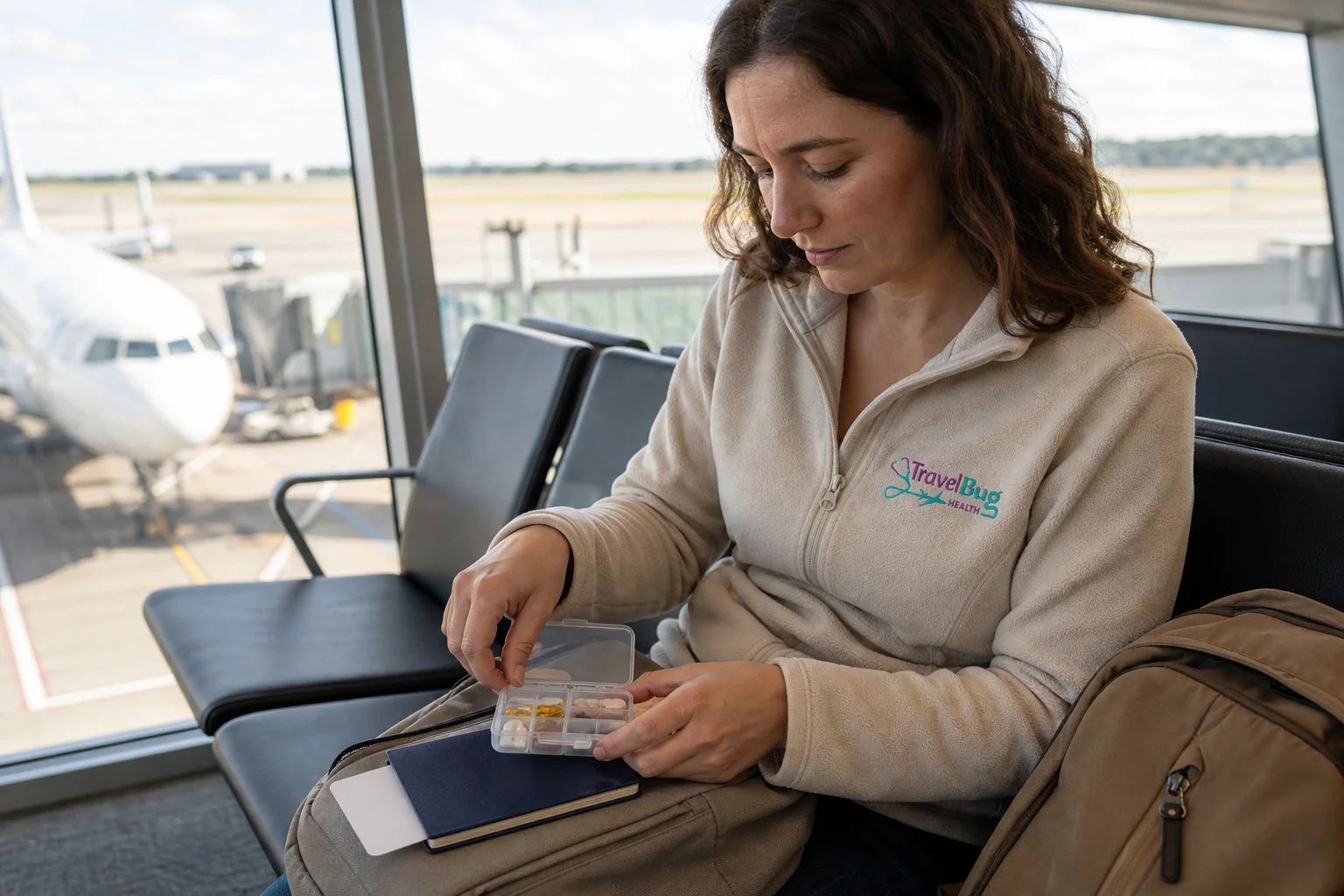
Can you get travel vaccines if you are immunocompromised? In many cases, yes: our specialists build your Vaccinations plan around your specific health history and destination. International travel is still possible with a weakened immune system, but timing and vaccine choice matter more than they do for average travelers.
By TravelBug Health Team, Travel Health Specialists
So, can you get travel vaccines if you are immunocompromised? Generally, yes. The CDC and most infectious disease specialists agree that people who are immunocompromised, whether from a chronic illness, cancer treatment, an organ transplant, or long-term medication, can usually receive many routine and travel-specific vaccines. What changes is not whether you can get vaccinated, but which vaccines are appropriate, how your body may respond, and how much lead time you need before departure. A healthcare provider familiar with travel medicine will review your diagnosis, current medications, and itinerary before building your vaccination plan, rather than applying one standard schedule to every traveler. Because immunocompromised travelers face higher stakes if something goes wrong overseas, seeking specialized health care before an international trip is always worth the extra planning time, so you can stay healthy before, during, and after your trip abroad.
Many travelers ask, "Can you get travel vaccines if you are immunocompromised, even close to departure?" Yes, but earlier is always safer, and the sections below walk through what's typically safe, what we approach carefully, and how to plan the timing.
Which Travel Vaccines Are Safe for Immunocompromised Travelers?
Most inactivated vaccines, meaning they contain no live virus and cannot cause the disease they protect against, are generally considered safe for immunocompromised travelers, though your response to them may be somewhat weaker than a traveler with a fully functioning immune system. Inactivated vaccines for typhoid and hepatitis A, such as Typhim Vi and Havrix or Vaqta, fall into this category, along with Heplisav-B or Twinrix for hepatitis B, Ixiaro for Japanese encephalitis (an insect-borne disease spread only through mosquito bites, so pair it with insect-bite prevention), and Imovax or RabAvert for rabies.
The CDC recommends flu vaccination for everyone aged 6 months and older, including immunocompromised travelers. Most flu vaccines in the US are inactivated or recombinant, meaning they contain no virus capable of replicating and cannot cause the flu itself. The only live influenza vaccine currently used in the US is FluMist, which is nasally administered and is NOT recommended for anyone with a weakened immune system. If your trip takes you to the Southern Hemisphere, where flu season runs roughly April to September, or to the tropics where flu circulates year round, timing your flu vaccine to your itinerary rather than the U.S. flu season is worth discussing at your consultation.
The immune response to any vaccine can be blunted when you're immunocompromised, so in some circumstances we may recommend an antibody check after vaccination to help confirm you're protected, such as with the rabies preventive vaccine series.
Which Travel Vaccines Should You Avoid or Delay If You Are Immunocompromised?
Live vaccines are the main category we approach carefully. A live vaccine contains a weakened version of the virus or bacteria it protects against, and in someone whose immune system can't mount a normal response, that weakened organism can occasionally cause a version of the illness it's meant to prevent. This is the conversation your specialist has with you before recommending, delaying, or skipping any live vaccine for your trip.
Is the Yellow Fever Vaccine Safe If You Are Immunocompromised?
The yellow fever vaccine is a live vaccine, and it's one we look at most closely for immunocompromised travelers. For most travelers, a single dose of the yellow fever vaccine provides lifelong protection, and proof of vaccination is required for entry to some countries where yellow fever is endemic. But the yellow fever vaccine isn't appropriate for everyone: because it's a live vaccine, we review both your health history and itinerary to ensure it is safe for you to receive. If the yellow fever vaccine isn't safe or appropriate, your travel health consultant has the knowledge to discuss other alternatives with you.
Can Immunocompromised Travelers Get Other Live Vaccines Before Traveling?
Besides the yellow fever vaccine, the oral typhoid vaccine (Vivotif), the MMR vaccine (measles, mumps, and rubella), and the oral cholera vaccine are also live vaccines that we generally avoid in immunocompromised travelers. That doesn't mean you're left without options: the injectable typhoid vaccine, Typhim Vi, is a single-dose inactivated alternative. Your travel health specialist can also discuss other alternatives to help prevent these diseases.
How Early Should Immunocompromised Travelers Get Vaccinated Before a Trip?
We generally recommend booking your pre-travel consultation at least 6 weeks before departure (CDC recommends 6 to 8 weeks), and immunocompromised travelers often benefit from starting even earlier. Some vaccines require multiple doses spaced days or weeks apart, and a weakened immune system may take longer to build full protection after each dose. Starting early also leaves room for destination-specific adjustments and for your oncologist, rheumatologist, or other specialist to weigh in on timing around your treatment schedule. If you're already inside that six-week window, don't assume it's too late, call us and we'll build the fastest safe plan for your itinerary.
What Should You Do About Travel Vaccines If You're on Chemotherapy, Biologics, or Steroids?
Chemotherapy, biologic medications (like those used for rheumatoid arthritis, Crohn's disease, or psoriasis), and long-term steroid use all affect how your immune system responds to a vaccine, and can each influence vaccination timing. During the consultation, we review your full medication and medical history to determine whether you need to avoid or alter any recommended vaccine schedules.
How Long After Stopping Immunosuppressive Medication Can You Get Travel Vaccines?
There's no single waiting period that applies to everyone. How long your immune system needs to recover after chemotherapy, biologics, or high-dose steroids depends on the specific medication, your dosage, and your overall health, so this is a question we work through with you and your treating provider rather than answering with a fixed number of weeks. In general, live vaccines are held until your care team confirms your immune system has recovered enough to receive them safely, while many inactivated travel vaccines can often be given sooner.
How Do You Find a Travel Clinic Experienced With Immunocompromised Patients?
Look for a clinic that asks about your full medical history, not just your destination and travel dates. A travel health specialist experienced with immunocompromised patients will ask about your diagnosis, current medications, recent treatment, and any planned changes to your regimen before recommending a single vaccine, and will coordinate with your oncologist, rheumatologist, or other treating provider when your case calls for it. That level of detail is easy to miss at a general pharmacy or a busy primary care office, where travel vaccines are often just one item on a long checklist. At our Scottsdale Travel Clinic, we build every immunocompromised traveler's plan individually, and we can also give you information for international travel beyond vaccines, including food, water, and insect-bite precautions relevant to your destination.
Frequently Asked Questions
Can you travel internationally if you are immunocompromised?
In most cases, yes. Many immunocompromised travelers take international trips safely every year with the right preparation, including a pre-travel consultation, an individualized vaccination plan, and a conversation with your treating provider about your specific diagnosis and destination. Some trips may need extra planning time or a modified itinerary, but being immunocompromised doesn't automatically rule out international travel.
Do immunocompromised travelers need extra vaccines other travelers don't?
Sometimes. Depending on your condition, your provider may recommend vaccines like pneumococcal or an additional vaccine dose that isn't part of a standard travel checklist, alongside your travel-specific vaccines. These recommendations are based on your individual health profile, not your itinerary alone, so they come out of a conversation with your specialist rather than a generic list.
Which travel vaccines are considered safe for someone who is immunocompromised?
Most inactivated vaccines, meaning they contain no live virus, are generally considered safe, including typhoid, hepatitis A and B, Japanese encephalitis, rabies, and flu vaccines. Your immune response may be somewhat weaker than average, so your specialist may recommend additional monitoring or an antibody check after vaccination to confirm you're protected before you travel.
Can immunocompromised travelers get live vaccines like the yellow fever vaccine before a trip?
Sometimes, but it depends on your specific condition and treatment. Live vaccines, including the yellow fever vaccine, carry a small risk in someone whose immune system can't respond normally, so we review your health history and treatment timeline before recommending, delaying, or skipping them. This is always an individualized decision, never a blanket yes or no.
Plan Your Vaccinations at Our Scottsdale Travel Clinic
Being immunocompromised adds a layer of planning to international travel, but it doesn't have to keep you home. Schedule an Appointment with our travel health specialists and we'll build a vaccination plan around your specific diagnosis, medications, and destination.
