

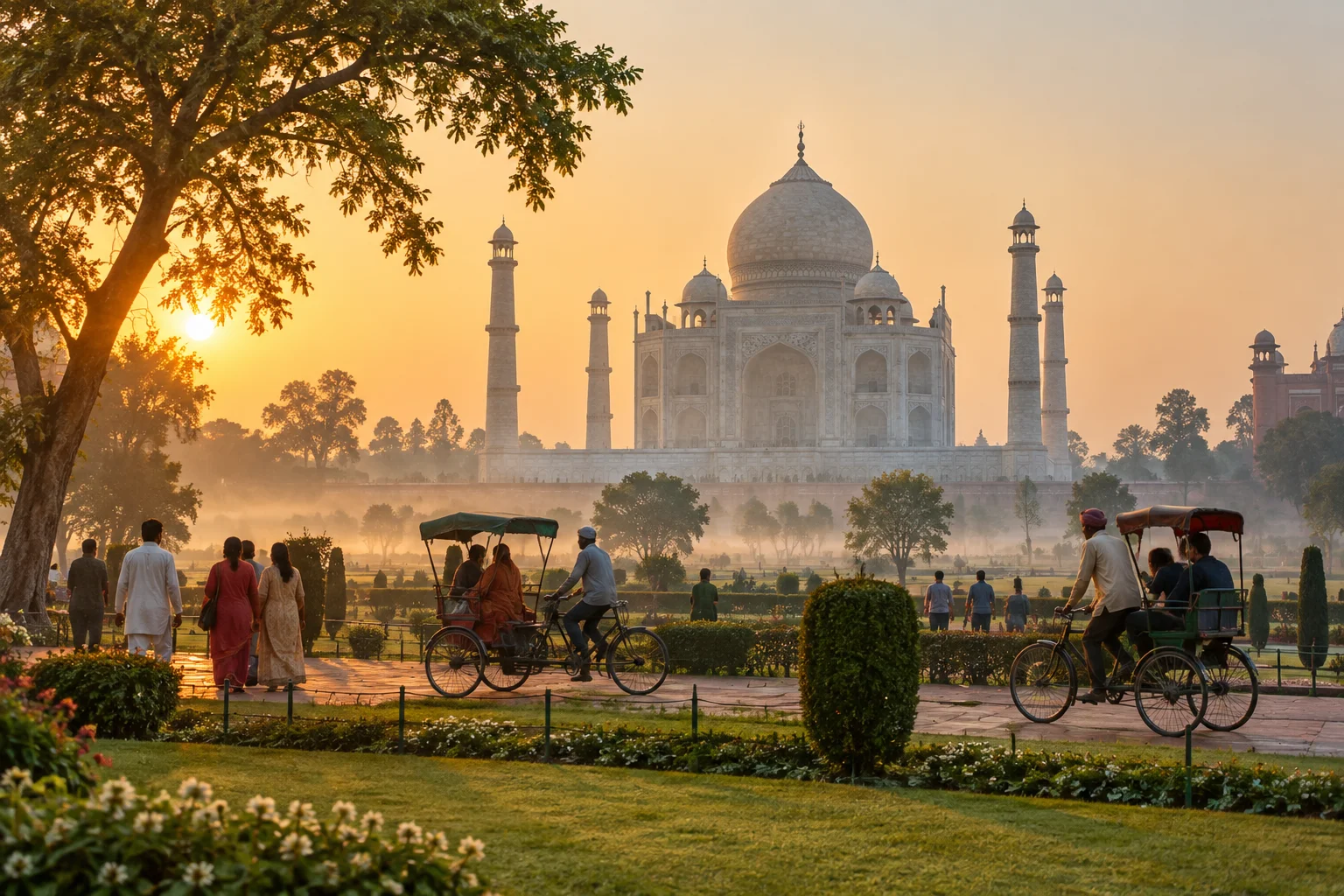
If you're touring Delhi, Agra, and Jaipur on the Golden Triangle, India travel vaccines protect against food, water, and mosquito-borne illnesses uncommon at home. Our Scottsdale Travel Clinic helps Arizona travelers sort out which vaccines are required, which are recommended, and when to schedule them.
By TravelBug Health Team, Travel Health Specialists
India Travel Vaccines You Need Before You Go
India travel vaccines aren't one-size-fits-all: what you need depends on your itinerary, the season, how long you're staying, and your vaccination history. A two-week Golden Triangle tour carries a different risk profile than an extended stay in rural areas. We review your itinerary and health history at a pre-travel consultation before recommending a plan.
Required Vaccines for Entry Into India
India does not require proof of any vaccination for travelers arriving directly from the United States. The one exception is yellow fever: India requires an International Certificate of Vaccination or Prophylaxis if you're arriving from a country with yellow fever transmission risk, most commonly in sub-Saharan Africa or South America. The next section covers how that certificate works.
Vaccines We Generally Recommend for India Travel
Hepatitis A vaccine (Havrix® or Vaqta®) is part of the routine US childhood immunization schedule, but since completion varies, we confirm your records first; we generally recommend it for most India itineraries, since the disease still spreads through contaminated food and water. We also generally recommend typhoid vaccination for the same reason. Depending on your itinerary, we may recommend hepatitis B vaccination too, since it spreads through blood and body fluids, which matters if you need medical care abroad. Confirming routine immunizations, including MMR (measles, mumps, and rubella) and Tdap (tetanus, diphtheria and pertussis), is part of a thorough pre-travel visit. Our Vaccinations team checks records and fills gaps in the same appointment.
Yellow Fever Vaccine and Certificate Rules for India
India does not require yellow fever vaccination for travelers arriving directly from the United States, but proof may be required if your itinerary includes recent travel from a country with yellow fever transmission risk, even for a short layover. A single dose usually provides lifelong protection for most travelers, per the World Health Organization's 2016 guidance, with no routine booster needed. The vaccine isn't appropriate for everyone, so your specialist reviews your health history and itinerary and weighs the risks and benefits before recommending it. It must be given at an authorized yellow fever vaccination center, since a regular doctor's office can't issue the International Certificate of Vaccination or Prophylaxis (the yellow card), and the certificate needs that center's official stamp to be valid at Indian immigration checkpoints.
Malaria Prevention for the Golden Triangle Route
Malaria risk in Delhi, Agra, and Jaipur is generally lower than in rural areas, but mosquito bites can happen anywhere, and nearby rural areas carry higher transmission risk, especially during and after monsoon season. Because risk varies by location, timing, and length of stay, we assess it individually rather than giving every traveler the same recommendation.
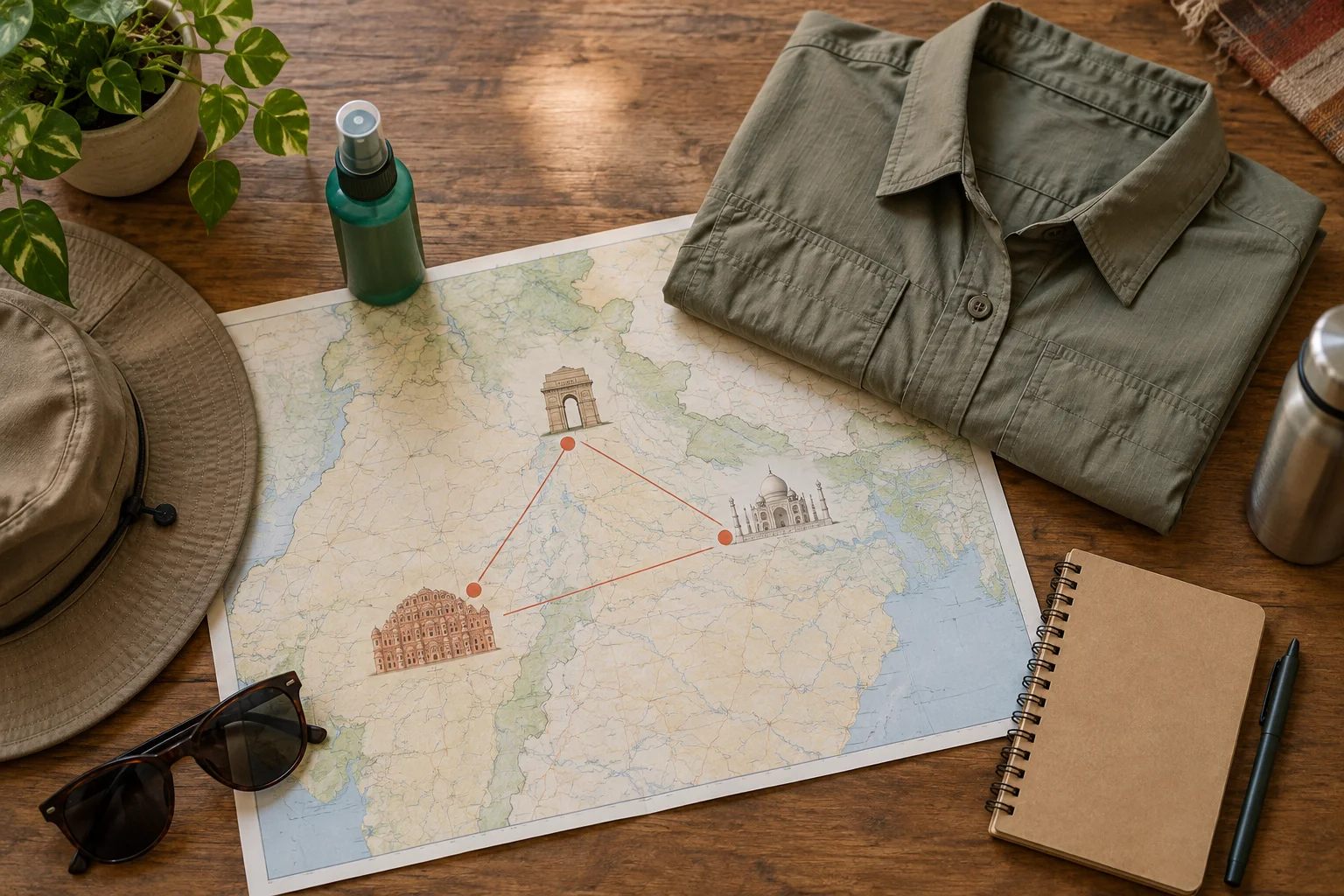
Preventing mosquito bites is the first line of defense: an EPA-registered repellent with DEET or picaridin, long sleeves in the evening, and permethrin-treated clothing all reduce exposure. Your specialist may also recommend an antimalarial such as atovaquone-proguanil (Malarone®), doxycycline, or mefloquine; chloroquine isn't effective for India, since the malaria parasite here has developed resistance to it. For areas where Plasmodium vivax malaria is more common, primaquine or tafenoquine (Arakoda®) may be considered, though both require a G6PD enzyme blood test first because of a hemolysis risk in people with G6PD deficiency.
Timing and Cost of India Travel Vaccines
How Soon to Get India Travel Vaccines
Because some vaccines need multiple doses spaced weeks apart, such as the combined hepatitis A/B vaccine (Twinrix®) or the oral typhoid vaccine, we recommend scheduling India travel vaccines at least 6 weeks before departure. If you're departing sooner, don't skip the visit: a single dose of hepatitis A vaccine still offers effective short-term protection right up until the day you leave. With Twinrix, you'll need the full series to be protected; one dose on short notice doesn't provide immunity on its own.
What India Travel Vaccines Cost
Cost depends on which vaccines and doses your itinerary calls for, since not every traveler needs the same combination. Insurance coverage varies by plan, so check with your insurer directly. For an accurate quote before you book your flights, call our office at (480) 435-2774 or schedule a consultation.
Typhoid, Rabies, and Japanese Encephalitis Vaccines for India
Typhoid Vaccine for India Travel
India sits within South Asia, a region the CDC identifies as higher risk for typhoid fever, alongside Southeast Asia, Africa, and parts of Latin America; the main risk factor is eating outside major hotels and well-reviewed restaurants. We generally recommend typhoid vaccination for most India itineraries, since typhoid spreads through contaminated food and water in busy markets and street stalls. Vaccination doesn't replace precautions: traveler's diarrhea from other pathogens is still the most common illness reported after a Golden Triangle trip, so being selective about food and water matters just as much as your vaccine record.
Two typhoid vaccine options exist in the US. The oral vaccine (Vivotif®) is live, requiring refrigeration and precise dosing: four capsules over about a week, final dose at least a week before travel, details easy to get wrong at a pharmacy that doesn't handle live vaccines often. The injectable option (Typhim Vi®) is a single dose, a simpler alternative on a tighter timeline.
Rabies Vaccine for Golden Triangle Travelers
Rabies is present in India, including on the Golden Triangle route, and spreads through the saliva of infected animals, most often dogs, when they bite or scratch. If your trip involves extended outdoor time, rural travel, animal interaction, or young children who may not reliably report an encounter, consider a pre-exposure rabies series using Imovax® or RabAvert® (two doses, day 0 and day 7). This preventive step simplifies treatment after a possible exposure by removing the need for rabies immune globulin, which can be hard to find in parts of India.
If you're bitten or scratched, wash the wound thoroughly and seek medical care immediately, even with the pre-exposure series; you'll still need additional doses afterward.
Japanese Encephalitis Vaccine for Short India Trips
Japanese encephalitis spreads only through mosquito bites, primarily in rural, agricultural areas where the virus circulates between mosquitoes, pigs, and wading birds. For a short Golden Triangle itinerary, your risk is generally lower than for extended stays in rural farming regions or during the monsoon and post-monsoon transmission season. We assess it individually rather than recommending Japanese encephalitis vaccine (Ixiaro®) for every India traveler. Insect-borne disease prevention, an EPA-registered repellent, long sleeves, and screened or air-conditioned lodging, protects against Japanese encephalitis, malaria, and dengue at once.
Travel Clinic Versus Pharmacy for India Vaccines
Many pharmacies offer a limited menu of travel vaccines, fine for something simple like a single hepatitis A dose. India travel often calls for more: live vaccines like the oral typhoid capsules or the yellow fever vaccine require specific storage and handling, multi-dose series like Twinrix need to be completed on schedule, and a personalized itinerary review determines which vaccines and antimalarial medication fit your trip. A general pharmacist or primary care provider doesn't always have the training or travel-specific products on site to manage all of that in one visit. At a dedicated travel clinic, your specialist reviews your full itinerary, health history, and timeline in one appointment, and handles live-vaccine storage and full-series completion as a matter of course, since that's the entire focus of the visit.
Frequently Asked Questions
What happens if I travel to India without getting vaccinated?
Skipping India travel vaccines doesn't prevent entry in most cases, since India doesn't require proof of vaccination from travelers arriving directly from the United States. It does leave you unprotected against diseases like typhoid and hepatitis A, which are more common in India than at home. If your itinerary includes travel from a yellow-fever-risk country, you may also be denied entry without a valid certificate.
How many India travel vaccines do I actually need?
It depends on your itinerary, timing, and health history rather than a single fixed list. Most India travelers benefit from hepatitis A and typhoid vaccination and a review of routine immunizations, while malaria prevention, rabies vaccination, and Japanese encephalitis vaccine fit some itineraries but not others. A pre-travel consultation is the most reliable way to find out which apply to your trip.
Can I still get India travel vaccines if my trip is only a few weeks away?
Yes. We recommend scheduling your visit at least 6 weeks before departure so multi-dose series have time to work, but a single dose of hepatitis A vaccine still offers effective short-term protection right up until the day you leave. Some vaccines and antimalarials can also start on a shorter timeline, so it's worth calling even close to your trip.
Do I need a yellow fever certificate to enter India from the United States?
Only if your itinerary includes recent travel from a country with yellow fever transmission risk, such as parts of sub-Saharan Africa or South America; India requires proof of vaccination in that situation. Travelers arriving directly from the United States generally don't need it. Your specialist reviews your itinerary and medical background first, since eligibility depends on individual health history.
Plan Your India Travel Vaccines With Our Scottsdale Specialists
Because India's vaccine needs shift with itinerary, season, and health history, the safest way to prepare is a one-on-one consultation before you book your flights. Schedule an Appointment at our Scottsdale Travel Clinic to build a personalized vaccine and prevention plan for your Golden Triangle trip and beyond.
