

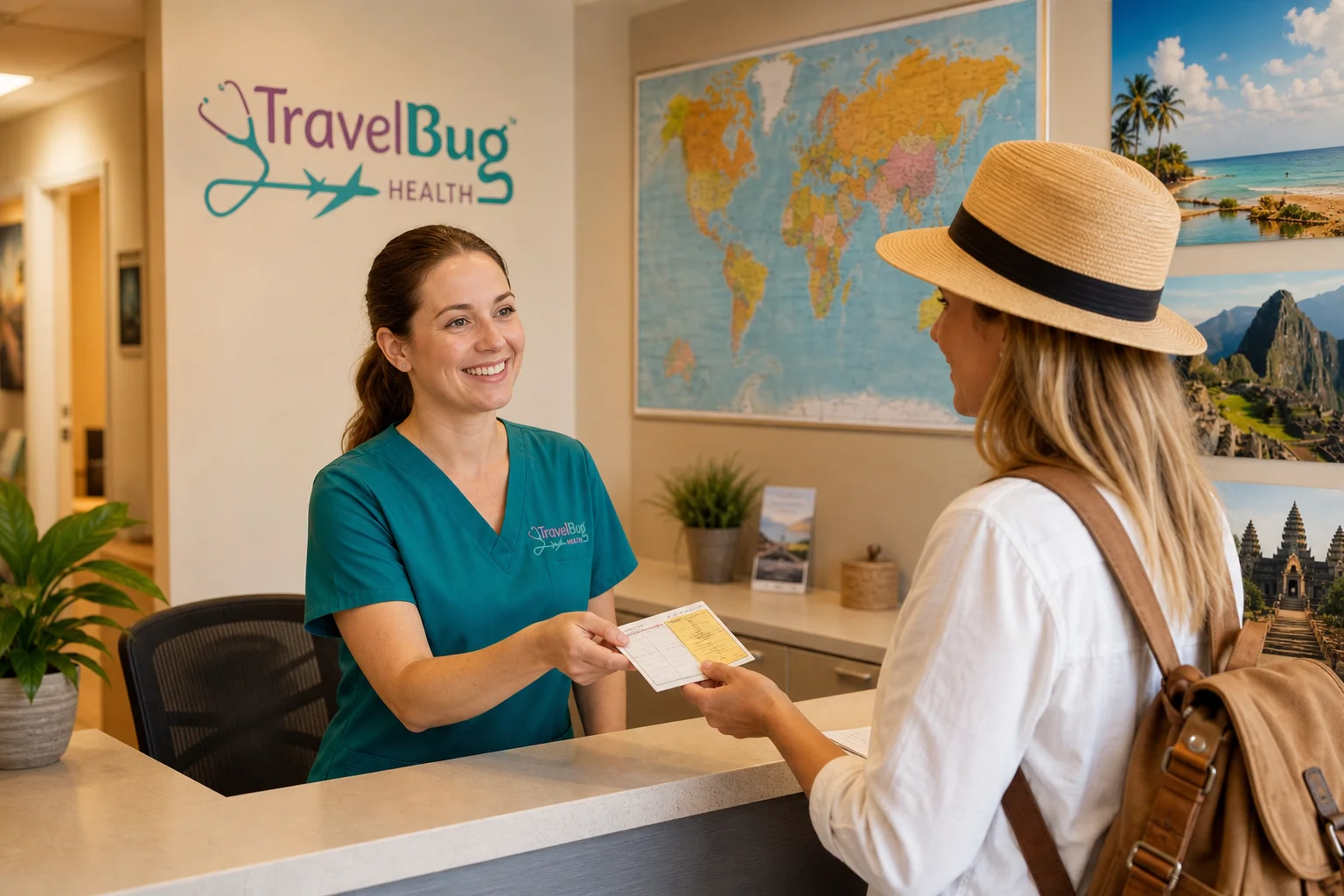
Planning to get your vaccines now for December travel to the Caribbean and Latin America is the single most important step you can take months before your departure date. Many required and recommended immunizations need weeks to reach full protection. Our Travel Clinic can map out your complete vaccination schedule today.
By TravelBug Health Team, Travel Health Specialists
Why December Is Peak Season and Why Advance Preparation Counts
December marks the height of travel season throughout the Caribbean and Latin America. Cooler, drier weather across much of Mexico, Central America, and South America draws millions of visitors from the United States each year. Popular destinations include Costa Rica, Colombia, Peru, Brazil, Belize, and islands scattered across the Caribbean Sea.
The surge in travel also brings a surge in exposure risk. Tropical and subtropical destinations carry disease risks that simply do not exist at home. Mosquito-borne illnesses, food and waterborne pathogens, and vaccine-preventable infections remain active concerns in many of these regions year-round. Planning your travel health protection early gives vaccines the time they need to build full immunity before your first flight.
The Centers for Disease Control and Prevention recommends consulting a travel health specialist at least four to six weeks before departure, and ideally eight to twelve weeks out for complex itineraries involving multiple countries or remote regions.
Yellow Fever Vaccine Requirements You Cannot Afford to Skip
Yellow fever is one of the most critically important vaccines for travelers heading to South America and parts of the Caribbean. For many destinations, this vaccine is not optional. Several countries require proof of yellow fever vaccination for entry, and that proof must be documented on an International Certificate of Vaccination or Prophylaxis, commonly called the yellow card.
Countries such as Brazil, Bolivia, Colombia, Ecuador, Peru, and Suriname have designated areas with active yellow fever risk. Some require proof of vaccination from all incoming travelers. Others require it only if you are arriving from a country with known yellow fever transmission. Requirements shift periodically, so confirming current rules for your specific itinerary before booking is essential.
The yellow fever vaccine is a live-attenuated vaccine administered as a single dose. The World Health Organization confirmed in its 2016 position paper update that a single dose provides lifelong protection for the vast majority of recipients. The CDC now considers one dose sufficient for most travelers, eliminating the former ten-year booster requirement.
Yellow fever vaccine is only available at authorized vaccination centers, and receiving it requires a risk and benefits discussion with a travel health specialist. Because the vaccine needs time to reach full protection, treat yellow fever vaccine timing as a priority rather than something to sort out in the final weeks before departure. Visit our Vaccinations page for a full list of travel immunizations we provide, including yellow fever for eligible travelers.
Core Recommended Vaccines for Your Caribbean and Latin American Destinations
Beyond yellow fever, several other vaccines are routinely recommended for travel to the Caribbean and Latin America:
Typhoid
Typhoid fever spreads through contaminated food and water and remains a concern in regions where sanitation infrastructure is less reliable. The typhoid vaccine is available as an injectable single dose or an oral series of four doses.
Hepatitis A and Hepatitis B
Hepatitis A spreads through contaminated food and water. Hepatitis B spreads through blood and bodily fluids. Both vaccines are recommended for most international travelers, and completing the series of either vaccine provides lifetime protection. A combined Hepatitis A/B vaccine series is commonly available and convenient for those who travel frequently.
Malaria Prevention
Malaria prevention requires prescription antimalarial medication rather than a vaccine. Risk varies by destination and season. Certain areas of South America, Central America, and the Caribbean carry active malaria risk, and the right antimalarial depends on matching the medication to your specific destinations and the length of your stay, a decision to make alongside broader malaria prevention planning.
Routine Immunizations
Measles, mumps, and rubella (MMR), varicella (chicken pox), and influenza vaccines should be current before any international travel. A recent dose of the Tdap vaccine (within the last 5 years) is also very important. This routine vaccine protects you against pertussis (whooping cough), which is common overseas and very contagious. Tetanus and diphtheria booster doses are recommended every ten years for adults. Being fully vaccinated against these routine illnesses before departure reduces disruption to your trip.
South America Travel Health: Special Considerations
South America presents distinct travel health challenges that require tailored preparation. The continent spans multiple climate zones, from Andean highlands to Amazonian rainforest to coastal cities, and each environment carries its own health risks.
Yellow fever risk in South America occurs in tropical and subtropical forest zones, particularly in the Amazon basin. Brazil, Peru, Colombia, and Bolivia each have areas of ongoing transmission. Travelers visiting high-altitude cities such as Cusco, La Paz, or Quito should also discuss altitude sickness prevention with their provider. Acetazolamide is commonly prescribed for the prevention of acute mountain sickness, per guidance from travel medicine specialists.
Dengue fever, Zika virus, and chikungunya circulate widely across South America, with Brazil currently having the highest incidence of chikungunya in the world. Your travel health consultant may recommend a chikungunya vaccine if your activities and itinerary place you at risk for this potentially debilitating disease. As of 2025, no approved vaccines for dengue or Zika are available for general travelers. Preventing these mosquito-transmitted diseases depends on insect repellent use, protective clothing, and staying in accommodations with air conditioning or screened windows.
Travelers heading into jungle or rural areas face additional risks from leishmaniasis and Chagas disease, both vector-borne parasitic infections. A thorough travel health consultation helps identify which regions carry elevated risk and what protective measures apply to your specific itinerary.

COVID-19 Vaccines and International Entry Requirements
COVID-19 entry requirements for international travel have changed considerably since the pandemic peak. Most countries in the Caribbean and Latin America no longer require proof of a covid vaccine or a negative test for entry. The United States removed its COVID-19 entry testing requirement in June 2022.
Even so, the CDC continues to recommend that travelers stay current with COVID-19 vaccination before any international trip, particularly for destinations with limited healthcare access. Being fully vaccinated reduces your risk of severe illness if exposure occurs abroad, and that matters when English-language medical support may be hours away.
Research published in The Lancet by Hause et al. (2022) confirmed that covid vaccines substantially reduce the likelihood of hospitalization and severe disease across circulating variants. For travelers, the concern is not only getting ill but potentially being quarantined or hospitalized in a foreign country far from home.
If your initial covid vaccine series is several years old, ask your travel health provider whether an updated dose is recommended before your December departure. Even where countries do not require a covid vaccine for entry, personal protection is a strong reason to stay current on your immunizations.
When to Get Your Vaccines for December Travel to the Caribbean and Latin America
The right window to get your vaccines now for December travel to the Caribbean and Latin America is September through October. The timeline for each vaccine varies, but here is a practical planning guide:
8 to 12 weeks before departure: Ideal window for your initial travel health consultation. This allows time to complete multi-dose series such as hepatitis A/B, oral typhoid, and pre-exposure rabies vaccines before you board.
4 to 6 weeks before departure: The CDC's minimum recommended lead time for most destinations. Single-dose vaccines and antimalarial prescriptions can still be arranged in this window.
2 weeks before departure: A narrow but workable window for single-dose vaccines. The yellow fever vaccine administered at this point still provides meaningful protection for most recipients.
Less than 2 weeks before departure: Emergency consultations remain worthwhile. A provider can still administer available vaccines, prescribe preventive medications, and give destination-specific guidance before you travel.
Do not wait until November to begin this process. If December travel is already on your calendar, scheduling your travel health appointment now is the right move.
Frequently Asked Questions
Do I need a yellow fever vaccine for every Caribbean or Latin American country?
Not every destination requires yellow fever vaccination, but many countries in tropical South America and parts of the Caribbean either have active transmission risk or require proof of vaccination for entry. Requirements may also apply based on countries you transited through. Always verify current requirements for your specific itinerary through official government health sources before departure.
How many doses of the yellow fever vaccine do I need?
For most travelers, a single dose of the yellow fever vaccine provides lifelong protection, per World Health Organization guidance updated in 2016. Boosters are no longer required for the general traveler population. However, pregnant women, immunocompromised individuals, and those traveling to very high-risk areas may have different recommendations. Discuss your complete health history with a travel health specialist before your vaccination appointment.
Are COVID vaccines required to enter Caribbean or Latin American countries in 2025?
Most Caribbean and Latin American countries removed COVID-19 vaccine entry requirements in 2022 and 2023. Requirements can shift based on local public health conditions, so check official government entry rules for your destination within 30 days of travel. The CDC recommends staying fully vaccinated before traveling abroad regardless of whether a destination currently mandates proof.
What is proof of yellow fever vaccination?
Proof of yellow fever vaccination for international travel is documented on the International Certificate of Vaccination or Prophylaxis, a standardized document issued by an authorized vaccination center. Several South American and Caribbean countries legally require this certificate for entry. Without it, you may be denied boarding or turned away at the border. Some countries accept digital certificates, but requirements vary by destination, so confirm specifics in advance.
What should I bring to my travel health appointment?
Bring your current vaccination records, your full travel itinerary including all countries and regions you plan to visit, your passport, health insurance information, and a list of current medications. Coverage for travel vaccines, including yellow fever, varies by plan, so confirming what your insurer pays for ahead of your appointment is worth the extra step. Details about planned activities such as hiking, rural travel, or wildlife exposure help your provider tailor your vaccine and medication recommendations precisely to your trip.
Book Your Pre-Travel Vaccines Before Your December Departure
Getting your vaccines now for December travel to the Caribbean and Latin America is the most effective way to protect yourself and keep your trip on track. Schedule an Appointment with our travel health team today and arrive at your destination prepared, protected, and confident.
