

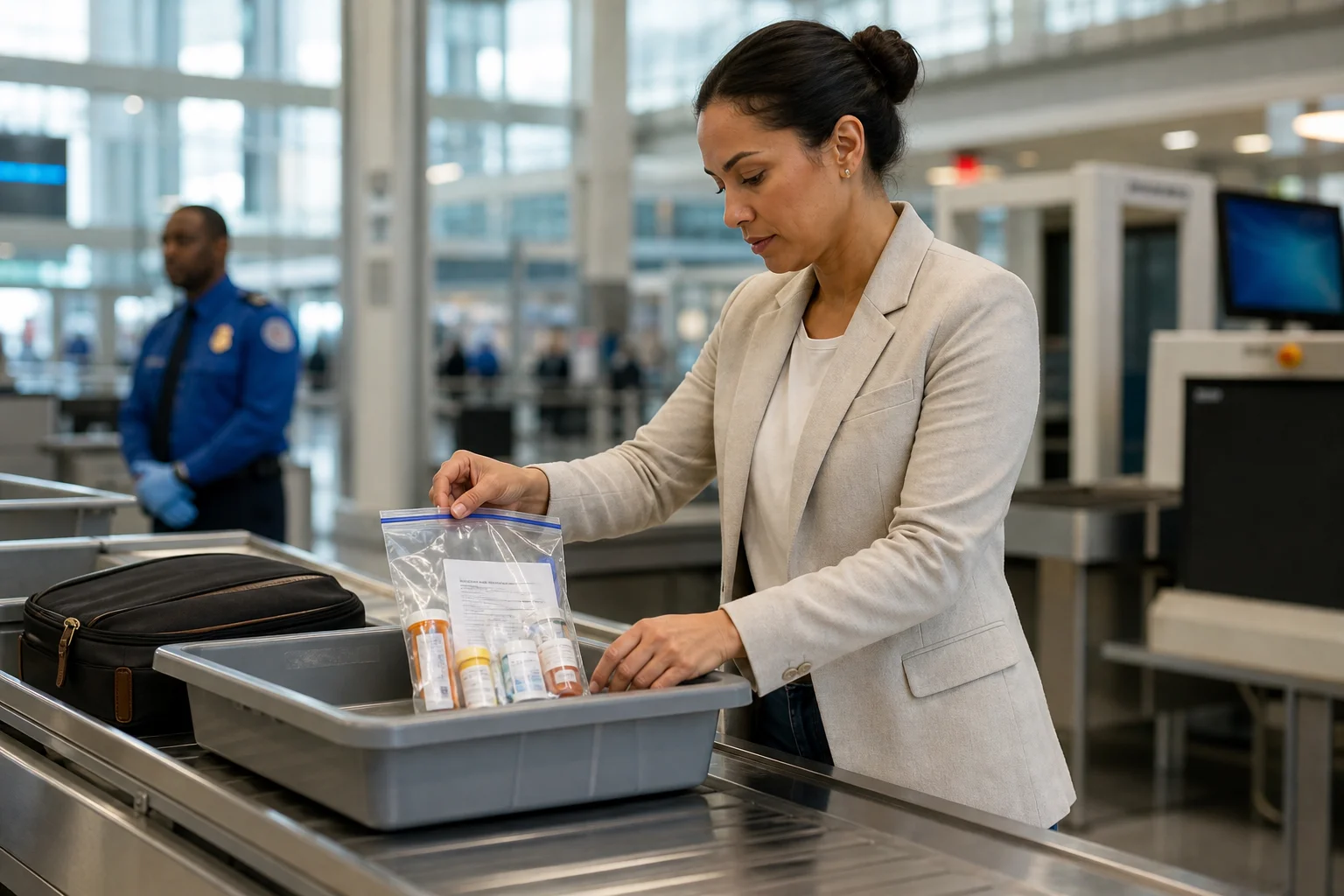
Understanding TSA medication rules is essential for any traveler heading abroad with prescriptions or medical supplies. The Transportation Security Administration permits most medications through airport checkpoints, but knowing the procedures before you fly prevents delays and confiscated items. Visit our Travel Clinic to get your travel health records organized before departure.
By TravelBug Health Team, Travel Health Specialists
What the Transportation Security Administration Permits at Checkpoints
The Transportation Security Administration allows prescription medications in both carry-on bags and checked luggage. Unlike the 3-1-1 rule that governs toiletries, liquid medications are exempt from the standard 3.4-ounce limit. You may carry larger volumes of liquid medication, such as insulin, eye drops, or liquid antibiotics, as long as you declare them before the screening process begins.
TSA officers are trained to handle medical items with care, but the process moves faster when you arrive prepared. Keep medications in their original labeled containers when possible. While the TSA does not legally require original pharmacy bottles, presenting them reduces the chance of secondary screening and speeds up the process considerably.
For controlled substances such as opioids or benzodiazepines, carry a copy of your prescription or a letter from your prescribing physician. TSA officers and customs agents abroad may request proof of medical necessity, and having documentation removes any ambiguity at the checkpoint.
How to Pack Medications for the Airport
The most common question travelers ask about TSA medication rules is whether to pack drugs in a carry-on bag or in checked luggage. Always carry critical medications in your carry-on. Checked luggage can be lost, delayed, or held at customs. If your insulin, anticoagulant, or rescue inhaler is in your checked bag and the bag is misrouted, you face a serious problem mid-trip.
A practical packing checklist for medications:
- Keep all prescription medications in labeled original containers or a clear zip-top bag
- Bring a printed copy of each prescription and, for controlled substances, a physician letter on official letterhead
- Separate liquid medications from other liquids and declare them to TSA officers at the checkpoint
- Pack a 30-day minimum supply for longer trips; many travel medicine providers recommend a 50-percent buffer in case of delays
- Store temperature-sensitive medications such as biologics or insulin in an insulated medical travel case with a TSA-approved gel pack
For injectable medications including insulin pens and auto-injectors, unused syringes are permitted when accompanied by the medication they are intended for. Declare all sharps to TSA officers before the screening process to avoid confusion.
Travelers on preventive antimalarial medications or other long-term prophylactics should build medication storage into their trip planning for extended stays in high-risk regions, since heat and humidity can affect certain formulations. Combining a solid storage routine with insect prevention strategies covers the full picture for travelers heading into high-risk zones.
TSA PreCheck and Medical Travelers
TSA PreCheck significantly improves the airport experience for travelers with medical needs. Enrolled passengers use dedicated lanes where the overall pace of the screening process is faster. For travelers with mobility limitations, implanted medical devices, or extensive medical supplies, PreCheck reduces time spent in standard queues.
However, even with PreCheck, TSA medication rules still apply. Liquid medications above 3.4 ounces must be declared, sharps must be disclosed, and devices such as CPAP machines or insulin pumps require a brief secondary inspection. The difference is that TSA officers in PreCheck lanes are familiar with these accommodations and the line moves faster.
If you have a pacemaker, cochlear implant, or other electronic medical device, carry the device card issued by your physician or manufacturer. TSA officers can use alternative screening methods such as a pat-down rather than a body scanner, and presenting the card expedites that conversation considerably.

Special Rules for Liquids, Syringes, and Medical Devices
The 3-1-1 rule does not apply to medications, but how you declare liquid medications matters. Place your liquid medications in a separate bin or clearly indicate them to TSA officers before your carry-on bag enters the X-ray machine. Officers may swab containers for explosive traces, a routine step that does not indicate suspicion.
Needles and syringes are permitted with accompanying medication. Used sharps must be stored in an approved sharps container, which most pharmacies sell in travel sizes.
Medical devices that connect to your body, such as continuous glucose monitors, insulin pumps, or ostomy supplies, are also subject to TSA medication rules and checkpoint procedures. Contact the device manufacturer before travel to confirm whether scanning equipment could interfere with device function. TSA officers can accommodate requests for alternative screening, but communicating the need early in the interaction makes the process faster for everyone.
For travelers who need destination-specific immunizations before departure, our Vaccinations page outlines which vaccines are required or recommended by destination and how to organize your documentation before the flight.
International Travel, Customs, and Prescription Documentation
TSA rules govern domestic airport security, but international travel adds a second layer of complexity. Many countries require that prescription medications, particularly opioids, stimulants, or injectable biologics, be declared at customs upon arrival. Some destinations require advance authorization for certain controlled substances.
Before any international flight, research the destination country's import rules for each medication in your kit. The U.S. Embassy website for your destination country is a reliable starting point. Your prescribing physician can issue a letter naming each medication, its dosage, and the condition it treats.
If your itinerary includes yellow fever zones in Africa or South America, an International Certificate of Vaccination or Prophylaxis serves as both a medical document and an entry requirement. Carry this certificate together with your other prescription documentation, since border officials may check it separately from your medication paperwork, and confirm the vaccination and timing requirements for your specific destination with your travel health provider well before you depart.
Frequently Asked Questions
Do I need the original prescription bottle to fly with medications? TSA does not legally require original containers, but carrying them is strongly recommended. Original pharmacy labels help TSA officers quickly identify the medication, reducing the likelihood of secondary screening. For controlled substances, original bottles combined with a physician letter provide the clearest documentation trail at both domestic and international checkpoints.
Can I bring more than a 90-day supply of medication on a flight? Yes. TSA does not limit the quantity of medication you carry in your carry-on bag or checked luggage. However, your airline and the destination country may have separate rules. For international travel, carrying a large quantity of a controlled substance, even legitimately prescribed, can prompt scrutiny at customs. A physician letter explaining the supply duration and medical need is your best protection.
Are over-the-counter medications subject to the same TSA rules as prescriptions? Solid OTC medications such as tablets and capsules face no special restrictions. OTC liquid medications, including cough syrup, liquid antacids, or children's medication, follow the same exemption as prescription liquids when declared. You may bring quantities exceeding 3.4 ounces as long as you notify TSA officers before the screening process begins.
What should I do if TSA officers question or confiscate my medication? Ask for a supervisor immediately. Document the medication name, the officer's badge number, and the checkpoint location. File a claim through the TSA Contact Center and notify your prescribing physician. In most cases, confiscation results from a misunderstanding that a supervisor can resolve on the spot.
Does TSA PreCheck make flying with medical supplies easier? Yes. PreCheck lanes move faster and TSA officers in those lanes are experienced with medical accommodations. You still need to declare liquid medications and sharps, but the expedited screening process reduces wait time and the pressure of secondary checks for travelers with extensive medical kits.
Get Your Travel Health Paperwork Ready Before You Fly
Sorting out prescriptions, physician letters, and vaccination records before you reach the airport saves time and removes the stress of a secondary search. Our team can prepare destination-specific health documentation tailored to your itinerary. Contact Us to get everything organized before your next adventure.
