

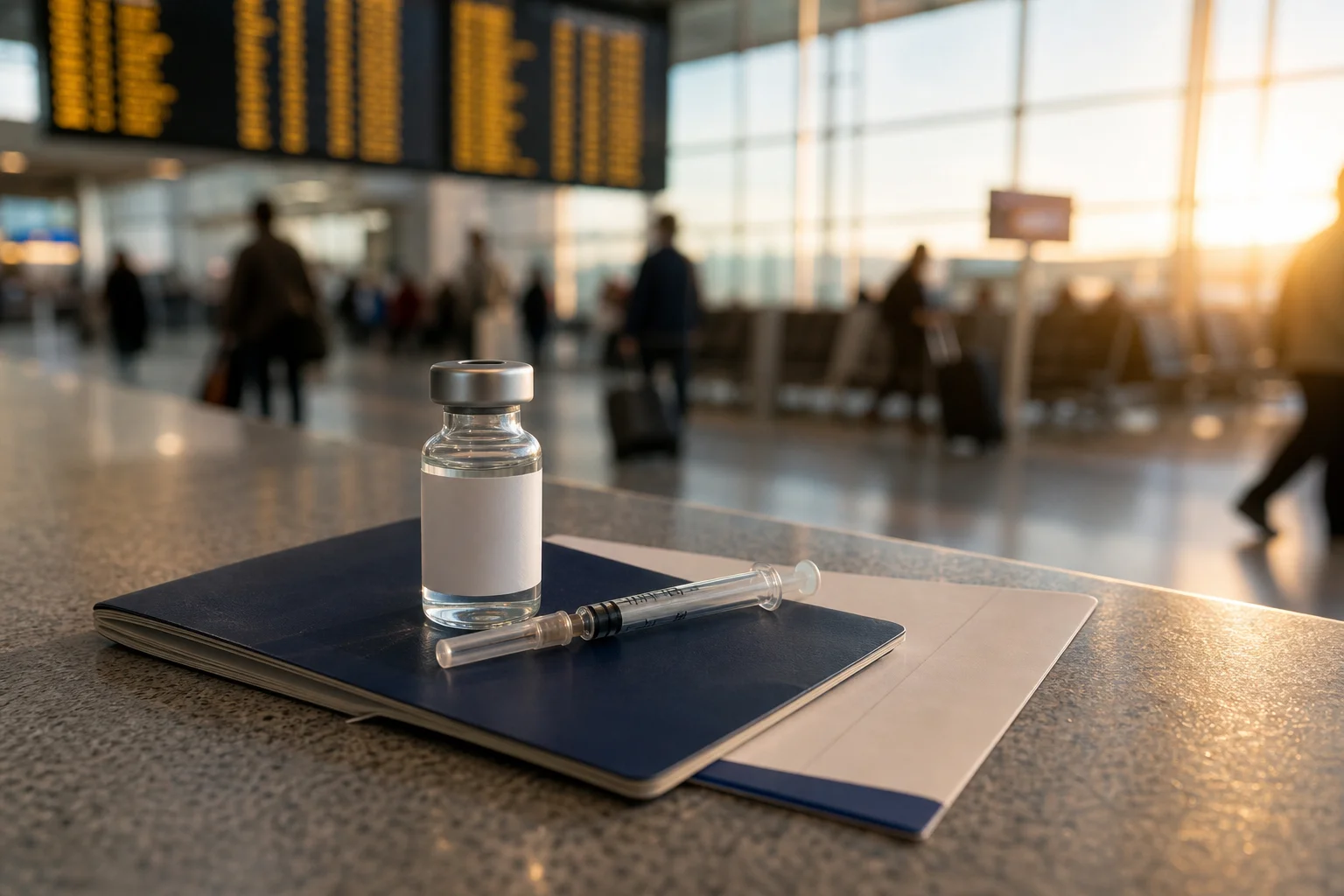
Traveling internationally this fall or winter means facing flu and RSV (respiratory syncytial virus) risks that may not follow the U.S. respiratory season calendar. Respiratory vaccines are important to keep you safe and healthy when you travel, and our Vaccinations team builds a schedule around your itinerary so a preventable illness doesn't derail your trip.
By TravelBug Health Team, Travel Health Specialists
How Far in Advance Should You Get a Flu Shot Before Traveling?
A flu shot should be administered at least 2 weeks prior to travel, since it can take up to 2 weeks to become fully protective. Per the Centers for Disease Control and Prevention (or CDC) guidelines, we generally recommend scheduling your pre-travel visit at least 6 to 8 weeks before departure. Too frequently we see travelers who wait until the week before their flight, when a flu shot may still help, but there is little room left to fit in any other travel-specific vaccines their itinerary calls for. Scheduling your flu vaccination before international travel, ideally with that six-week runway, gives your immune system time to fully respond and leaves space to coordinate flu prevention with anything else on your pre-travel checklist.
Can You Get the RSV Vaccine and a Flu Shot at the Same Time?
Yes. Current CDC guidance supports giving flu vaccines and the RSV vaccine during the same visit, typically as separate shots in each arm. Getting both at once is often the most efficient option for travelers juggling a packed pre-departure to-do list, and it does not appear to blunt the immune response to either vaccine. Your specialist will still review your personal health history, since some medical conditions call for spacing doses differently.
Who Needs the RSV Vaccine Before a Trip?
RSV causes a lung infection that can turn serious quickly, and international travel often means more crowded flights, trains, and group tours where a virus like this spreads easily. The CDC recommends a single dose of RSV vaccine for everyone aged 75 and older, and for adults aged 50 to 74 who are at increased risk of severe RSV illness, which includes chronic heart and lung disease. It is not an annual shot: if you have had one dose, you have completed the series. Your medical provider is the best resource to determine if the RSV vaccine is right for you.
Is the RSV Vaccine Only for Older Adults?
Not necessarily, though older adults remain the core group targeted by current guidance. Most healthy younger travelers do not need the RSV vaccine before a trip, since the recommendation focuses on higher-risk groups rather than the general traveling public. That said, if you are traveling with infants or young children, ask your specialist about RSV prevention options, since those differ entirely from the routine adult vaccine.
Is the Flu Vaccine Required for International Travel?
No country currently requires proof of flu vaccination for entry, unlike yellow fever documentation for parts of Africa and South America. However, influenza remains one of the most common vaccine-preventable diseases worldwide. The CDC recommends flu vaccination for everyone aged 6 months and older, and international travel puts you in exactly the settings, like airport terminals and long layovers, where respiratory disease moves fastest between travelers. We treat flu prevention as a standard part of any pre-travel visit rather than an add-on.
How Flu Season Shifts Depending on Where You're Traveling
In the Northern Hemisphere, flu season generally runs from October to May, and U.S. flu vaccines are reformulated each year for the strains expected during that upcoming season. In the Southern Hemisphere, influenza season generally runs from about May through October, with the highest activity usually from June to August, essentially their winter. Destinations near the equator or in the tropics can see flu activity year round. Flu and RSV season overlap almost entirely each fall, which is one more reason many travelers choose to get both vaccines prior to the respiratory season. Your travel health specialist often has access to the latest epidemiologic data and can provide further guidance about which specific regions may have unusually high flu activity or novel influenza strains.
Can I Get a Flu Shot If I'm Traveling to the Southern Hemisphere During Their Winter?
Here's where it can get tricky. If you are traveling south of the equator, you should be protected for the flu season there, which generally runs from about May through October, the reverse of the U.S. season. However, flu doses in North America start to become scarce towards the end of our fall and winter flu season and all (Northern Hemisphere formulation) flu vaccine doses expire at the end of June each year. This is another good reason to plan your pre-travel consultation months in advance, so your travel health specialist can advise you whether your flu shot from the current season will still be protective, or you should get an additional dose while they remain available.
What Are the Side Effects of Flu and RSV Vaccines?
Most people tolerate flu vaccines and the RSV vaccine with only mild, short-lived side effects: soreness at the injection site, a low-grade fever, fatigue, or muscle aches for a day or two. Every flu vaccine we give uses an inactivated or recombinant formulation with no live virus capable of replicating, which means that the flu shot cannot "give you the flu." If you feel sick shortly after a flu shot, it could be explained by one of three things:
- You could be having a short-lived immune response that can feel like being mildly sick even though it isn't influenza. This usually resolves within a few days.
- You could still get sick from a circulating flu virus during the (up to) two weeks it takes for the vaccine to become fully protective.
- Since flu shots are generally given during respiratory season, you could easily get sick from an unrelated respiratory virus already circulating around you, especially in a crowded airport or on a long flight.
Most flu shots come in single-dose prefilled syringes, the standard we use, which contain no thimerosal or other preservative.
How Long Does Flu Vaccine Protection Last While Traveling?
Flu vaccine protection generally lasts about six months, which covers most trips, but travelers on a semester abroad or a long-term assignment spanning two flu seasons or two hemispheres should ask about timing of revaccination rather than assuming one shot carries them the whole way. Protection from the RSV vaccine is also designed to last a full season, though your specialist can speak to how that holds up for a multi-season stay.
Where to Get Respiratory Vaccines Right Before Your Trip
A flu shot from your pharmacy is better than skipping one, but a consultation at a dedicated Travel Clinic means you also get screened for protection against other travel-related illnesses, something a walk-in pharmacy visit isn't designed for. We can usually provide all the travel-specific vaccines for your itinerary, including your flu shot, in the same visit, so you leave with everything you need instead of making a second trip across town.
Frequently Asked Questions
Can a flu shot give you the flu?
No. U.S. flu vaccines are inactivated or recombinant and contain no live virus able to replicate, so the shot itself cannot cause influenza. Feeling sick afterward usually comes down to one of three things: it takes about two weeks to build full protection, a different respiratory virus was already circulating around you, or you're noticing short-lived immune-response side effects like soreness or a low-grade fever.
Is the flu vaccine safe during pregnancy? Yes, the flu vaccine is routinely recommended during pregnancy and also helps protect a newborn in the months after birth, when the baby is too young to be vaccinated directly. The RSV vaccine may also be appropriate for some pregnant travelers for the same reason.
Do I need a new flu shot if I already got one this season in the U.S.? Not usually, unless your trip spans two flu seasons in different hemispheres or falls many months after your last dose. A traveler heading to the Southern Hemisphere during their winter flu season, for example, may still have meaningful protection from a Northern Hemisphere shot. At your consultation we check the timing of your last vaccination against your travel dates.
Can children get a flu shot before international travel?
Yes. The CDC recommends flu vaccination for everyone aged 6 months and older, including children traveling internationally, and it's one of the more straightforward vaccines to fit into a pre-travel visit. Younger children may need a second dose depending on their vaccination history, so ask your specialist about the right schedule for your child.
Are the RSV and flu vaccines available for travelers at TravelBug Health? We can advise you on whether you should get these vaccines, and we usually carry the regular flu vaccine (for 6 months to 65 years of age) in stock. We do not currently administer the RSV vaccine or the high-dose influenza vaccine which is recommended for travelers 65 years of age and older. These are both readily available at most pharmacies and some doctor's offices.
Book Your Flu and Travel Vaccinations Before You Travel
Arizona travelers heading abroad this season can get flu shots and any other travel-specific vaccines in a single visit. Schedule an Appointment at our Scottsdale Travel Clinic before you depart.
