

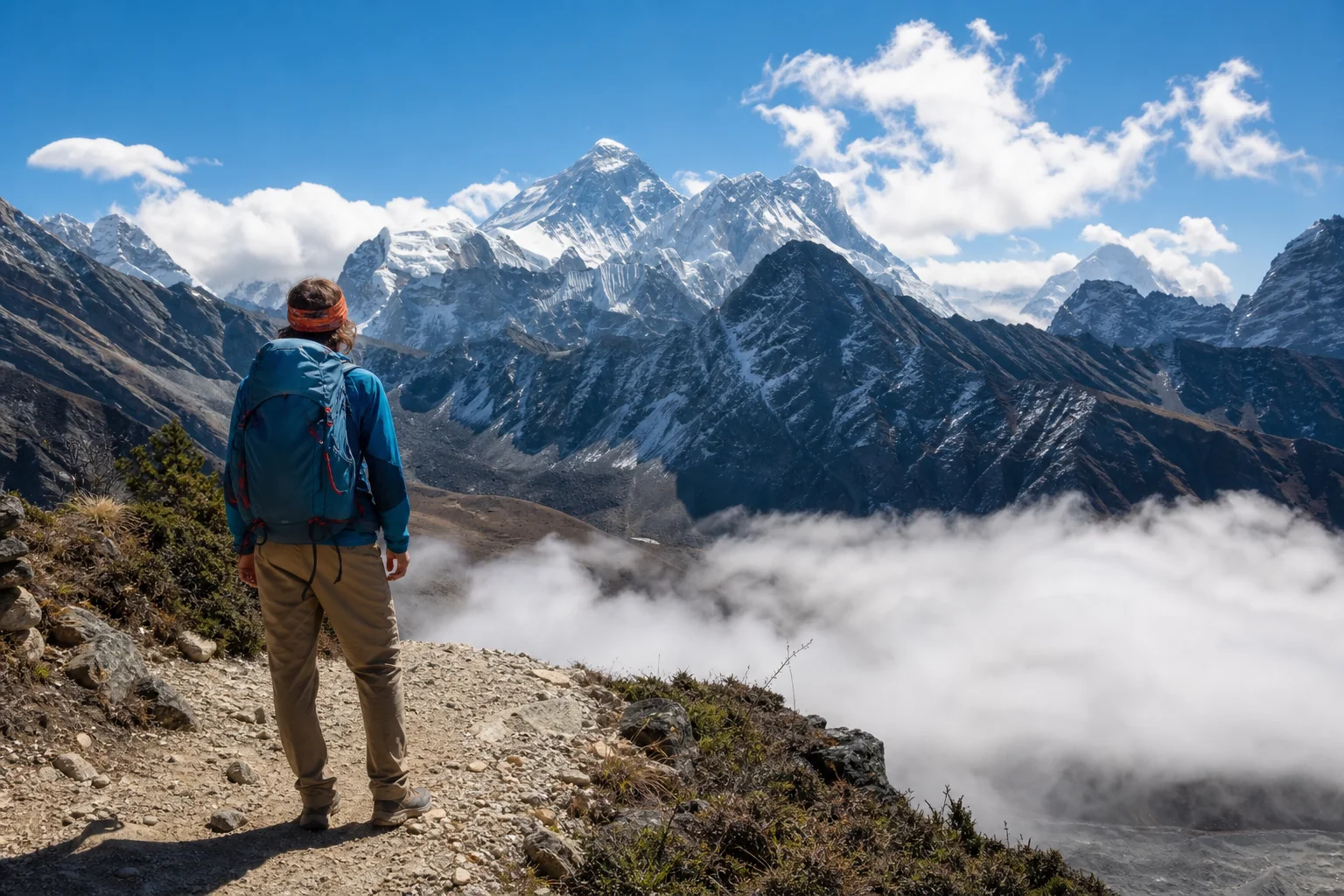
Altitude sickness can strike within hours of reaching high altitude, turning a hiking trip to Mt. Kilimanjaro, the Himalayas or Cusco into a medical emergency. If you're an Arizona traveler planning a high elevation adventure, our Travel Clinic can help you prepare so altitude sickness doesn't derail your trip.
By TravelBug Health Team, Travel Health Specialists
What Is Altitude Sickness and Why High Altitude Affects Your Body
Altitude sickness can happen because air pressure drops as you climb, even though the percentage of oxygen in the air stays the same. With less pressure, each breath provides less oxygen to your blood. Your body responds by breathing faster and increasing your heart rate, but symptoms may develop while it is still adjusting to the lower oxygen level.
Most travelers start noticing symptoms above roughly 8,000 to 10,000 feet, a range that covers popular destinations like Cusco, La Paz, and many Himalayan trekking routes. Flying or driving straight to a high altitude town, rather than ascending gradually over several days, is the single biggest reason otherwise healthy travelers get sick on arrival.
Recognizing the Symptoms of Altitude Sickness Early
The symptoms of altitude sickness are your body's way of signaling it hasn't adjusted to lower oxygen levels yet. Mild cases usually include a throbbing headache, nausea, loss of appetite, fatigue, dizziness, and trouble sleeping, often starting within six to twenty four hours of reaching a new elevation. If you rest at the same altitude and avoid climbing higher, these symptoms typically resolve within a few days.
Watch closely for warning signs that mild illness is turning into something more serious: a headache that won't respond to over the counter medication, vomiting that won't stop, confusion, unsteady walking, or shortness of breath even while sitting still. Those symptoms mean it's time to immediately descend and seek medical care rather than waiting it out.
Acute Mountain Sickness, HAPE, and HACE
Acute mountain sickness is the mildest and by far the most common form of altitude illness, and it's what most people mean when they talk about feeling rough at elevation. It's diagnosed when a headache is paired with at least one other symptom, like nausea, fatigue, or dizziness, in someone who has recently gained altitude.
Left unmanaged, in some cases acute mountain sickness can progress into two rarer but severe complications. High-altitude pulmonary edema (HAPE) happens when fluid builds up in the lungs, causing a persistent cough, chest tightness, and breathlessness that worsens even at rest. High-altitude cerebral edema (HACE) involves swelling in the brain and brings on confusion, loss of coordination, and a severe headache that medication doesn't touch. Both HAPE and cerebral edema are medical emergencies that require immediate descent to a lower altitude and, in many cases, supplemental oxygen or hospital care.

Measures to Prevent Altitude Sickness
The most reliable prevention strategy is also the simplest: climb gradually and let your body acclimatize. Above 10,000 feet, aim to increase your sleeping elevation by no more than about 1,000 feet per day, and build in a rest day every few thousand feet of gain. Staying well hydrated, limiting alcohol as much as possible, and avoiding strenuous exertion on arrival all give your body a better chance to adjust its oxygen levels naturally.
The Acclimatization Numbers Worth Writing Into Your Itinerary
Most travelers plan a trip around flights and permits and only think about elevation afterward. We suggest doing it the other way around, because the shape of your itinerary is what determines your risk. The Wilderness Medical Society guidance summarized in the CDC Yellow Book gives you concrete numbers to plan against:
- Avoid going from below about 4,000 feet to a sleeping altitude above 9,000 feet in a single day.
- Once you are sleeping above about 9,800 feet, raise your sleeping altitude by no more than about 1,600 feet per night.
- Add an extra acclimatization night for every 3,300 feet of sleeping altitude you gain.
- Climb high and sleep low. Day trips to a higher elevation are far easier on your body than sleeping up there, because oxygen levels in your blood drop lowest during sleep.
- Avoid alcohol entirely for the first 48 hours at altitude, and keep it limited as much as possible after that. Keep exercise mild for those first two days as well.
- If you drink coffee every morning at home, keep drinking it. A caffeine withdrawal headache at 11,000 feet is easy to mistake for the first sign of altitude sickness.
Sleeping two or three nights somewhere around 8,000 to 9,000 feet before you go higher is one of the most protective things you can do, and it costs you nothing but time on the calendar.
Risk Depends More on Itinerary Than Fitness
It may seem counterintuitive, but the risk of altitude illness is unrelated to someone's age, fitness level, gender or weight. The only consistent trait that is predictive of whether you will most likely get altitude illness is if you have had it in the past. In the travel clinic, we assess your risk of altitude illness based on whether you have a history of altitude symptoms in the past, how high an altitude you are traveling to and the amount of time you take to acclimatize to that altitude. So, your itinerary becomes the single most important predictor of risk.
Predicting risk is important because it helps you anticipate your likelihood of getting sick and helps to assess whether a preventive medication may help you avoid symptoms. Travelers generally fall into three broad risk categories. (International guidelines are usually cited in meters, but we have converted them to feet for our readers in the US.)
- Lower risk. You have never had altitude illness, and you are sleeping below about 9,000 feet on your first night, with gentle gains after that. Preventive medication is usually unnecessary. Carry an over the counter pain reliever and know the warning signs.
- Moderate risk. You have had acute mountain sickness before, or your first night is between roughly 9,000 and 11,150 feet, or you are gaining more than about 1,600 feet of sleeping altitude per day above 9,800 feet with rest days built in. Preventive medication is worth discussing.
- Higher risk. You have a history of HAPE or HACE, or your first night is above about 11,150 feet, or you are climbing fast above 11,500 feet with no rest days. In this scenario, we generally recommend preventive medication and sometimes suggest that you consider extending your ascent to allow more time for acclimatization.
Most of the travelers we see fall into the moderate risk category. Common itineraries in South America have travelers flying directly from Lima to Cusco, Peru (elev. 11,150 feet), or into La Paz, Bolivia (average elev. about 12,000 feet), putting them quickly at higher elevation with no time to become acclimatized. According to the CDC Yellow Book, rates of altitude illness approach 50 percent with this kind of rapid ascent by air, so travelers flying into these two cities should consider taking a preventive medication. Quito, the capital of Ecuador, is situated a little lower at about 9,400 feet.
Machu Picchu, the Sacred Valley and Cusco
Machu Picchu (elev. 7,970 feet) and the Sacred Valley (roughly 9,000 to 9,700 feet) in Peru are very popular destinations, and both are lower than Cusco (elev. 11,150 feet), where most travelers first arrive by plane. Some destinations reached from Cusco, including Rainbow Mountain, are even higher, up to 15,000 to 17,000 feet. One way to improve acclimatization and reduce the chance of symptoms is to descend immediately after arriving in Cusco to the Sacred Valley, around Ollantaytambo at roughly 9,200 feet, and sleep there for the first night or two before starting any trekking.
Very High Elevations: Mt. Kilimanjaro and Everest Base Camp
Mt. Kilimanjaro is a popular trekking destination and, at 19,341 feet (5,895 meters), is the highest point in Africa. At that extreme altitude, almost all climbers will experience some degree of altitude related symptoms, and these can often prevent climbers from reaching the summit. The chance of successfully summiting Kilimanjaro increases with the number of days spent climbing. Taking 7 or more days (instead of 5, for instance) to climb the mountain significantly increases the chances of reaching the summit without being turned back because of serious altitude symptoms.
Nepal is nestled in the heart of the towering Himalayas, but many of the more visited destinations like Kathmandu (elev. 4,600 feet) are at lower elevations on the plains or in the valleys where altitude illness is not a risk. The trek to Everest Base Camp (elev. 17,585 feet) in Nepal climbs to a very high altitude with the risk of altitude illness, but the trek itself usually takes over a week. As with Kilimanjaro, choosing an itinerary that includes extra days to acclimatize may be a worthwhile consideration.
In our clinic, we usually recommend trekkers to these very high elevations take medication to reduce the chance of altitude illness.
Medications and Treatment Options for Altitude Sickness
Acetazolamide (brand name Diamox®) is the medication most often prescribed for altitude, and it is the only one FDA approved for this use. It does not mask symptoms. It makes your blood slightly more acidic, which drives your breathing, and it compresses the ventilatory acclimatization that would normally take three to five days into about one. A typical preventive course is started 24 hours prior to beginning your ascent and continues through your first days at your highest elevation. Dosing and timing of the medication is determined by your travel health consultant depending on your specific itinerary and medical history. In some cases, it can also be used as a treatment for symptoms, once they occur.
A few practical things travelers should know about acetazolamide:
- Tingling of the fingers and toes is a common side effect of acetazolamide, and not a worrying warning sign. It is generally benign and resolves after the medication is stopped.
- Drinks may taste flat or metallic while you're taking it.
- It causes more frequent urination, so you have to be more conscious of staying hydrated.
- An allergy to sulfa antibiotics does not rule it out. Acetazolamide is a non-antimicrobial sulfonamide, and cross reactions have not been reported. A history of anaphylaxis to any medication, or multiple drug allergies, is a different conversation and one we want to have before you leave.
Dexamethasone is another medication you may hear about. It is very effective at reversing moderate to severe symptoms and can be lifesaving in HACE, but it masks the underlying problem rather than speeding acclimatization. For that reason, it is best used as a rescue drug and as an aid to descent, not as something you take to keep climbing. Ibuprofen at over the counter strength also has good evidence behind it for preventing altitude headache, though the evidence is not quite as strong as it is for acetazolamide.
For travelers with a known history of HAPE, a specialist may add nifedipine or tadalafil specifically to protect the lungs; those are prescribed case by case by a clinician who works in high-altitude medicine, not as general trip prep.
Treatment for mild acute mountain sickness starts with the things that cost nothing: stop ascending, rest at the same elevation, hydrate, and treat headache and nausea with standard over the counter medication. Most mild cases resolve in 12 to 48 hours as long as you don't climb higher. If symptoms worsen while you're resting at the same altitude, rapid and immediate descent is required. A descent of just 1,000 feet often produces a noticeable improvement, and 2,000 feet is the target in more serious cases. Supplemental oxygen is the second best option and may even be available at the front desk of many high-altitude hotels and lodges. Remote expeditions sometimes carry a portable pressurization bag such as a Gamow bag, which mimics a descent of several thousand feet and can buy enough time overnight to get someone down safely in the morning.
For HAPE and HACE, descent is urgent and mandatory. Any exertion by the sick person makes HAPE distinctly worse, so the descent needs to be assisted as much as circumstances allow.
Health Conditions to Consider at Altitude
Altitude puts extra demand on your heart, lungs, and blood, which is why an existing condition that feels well managed at home can behave differently at 11,000 feet. A general rule from high-altitude medicine is that the more limited your exercise tolerance is at sea level, the more limited it will be up high.
Conditions that usually add little or no extra risk include well-controlled asthma, controlled high blood pressure, diabetes, controlled seizure disorders, and low-risk pregnancy at moderate elevations. Conditions that call for a real conversation before you book include stable angina, non-revascularized coronary artery disease, moderate COPD, compensated heart failure, poorly controlled blood pressure, severe sleep apnea, and sickle cell trait. Conditions that generally rule out high-altitude travel include unstable angina, poorly controlled asthma, severe COPD, decompensated heart failure, high-risk pregnancy, significant pulmonary hypertension, and a heart attack or stroke within the last 90 days.
Three of these are serious and common enough to call out specifically:
- Pregnancy. Short stays at moderate elevation are generally low risk after 20 weeks in an uncomplicated pregnancy, but sleeping above roughly 10,000 feet is best avoided, and trekking far from medical care is a separate risk from the altitude itself.
- Diabetes. Glucose meters can read inaccurately at altitude and insulin pumps can dose incorrectly, on top of the practical problem of keeping insulin from freezing on a cold multi-day trek.
- Sickle cell trait. Even moderate elevation can trigger a crisis in someone with sickle cell trait, sometimes at ordinary tourist altitudes and without heavy exertion. Travelers born outside the US were often never screened as children, so this is worth testing for before a high-altitude trip rather than discovering on the mountain.
Children are as susceptible to altitude illness as adults, and it is harder to spot in a child who is not yet talking, where it may show up as loss of appetite, irritability, and pallor rather than a reported headache. Infants under six weeks old should not be taken to high altitude.
Three Rules That Prevent Almost Every Serious Case
Deaths from altitude illness are rare, and they almost always follow the same pattern: symptoms were dismissed or not recognized until descent was no longer easy. The onset is slow enough and predictable enough that three habits cover most of the risk:
- Learn the early symptoms, which feel a great deal like a hangover, and be willing to say out loud that you have them.
- Never go to sleep at a higher elevation than the night before while you have any symptoms, no matter how minor they seem.
- Descend if symptoms get worse despite resting and treating at the same elevation.
There is also one objective check worth knowing, because the person who is getting sick is the worst judge of it. Ask them to walk a straight line heel to toe, the way a roadside sobriety test works. Someone who cannot do it has lost coordination, and that is the signal to start down immediately, while they can still walk on their own rather than needing to be carried.
The third rule is where group dynamics do the most damage. On an organized trek there is real pressure not to slow the group down, and that pressure is exactly what can turn a manageable headache into an evacuation. Decide before you go that your symptoms, not the itinerary, get the final say.
Frequently Asked Questions
What is the fastest way to treat altitude sickness symptoms? Stop ascending, rest at your current elevation, hydrate, and treat headache or nausea with standard over the counter medication. Most mild cases improve within 12 to 48 hours. If symptoms worsen or don't respond, descending is the most effective and immediate treatment available, and even 1,000 feet often makes a clear difference.
Can altitude sickness turn into something more serious? Yes. Acute mountain sickness can progress into high-altitude pulmonary edema or high-altitude cerebral edema, both of which are medical emergencies. Warning signs include breathlessness at rest, confusion, and unsteady walking. These require immediate descent and medical evaluation rather than waiting for symptoms to pass.
How high do you have to go before altitude sickness becomes a risk? Most travelers start feeling effects above roughly 8,000 to 10,000 feet, though individual susceptibility varies widely regardless of fitness level. Ascending quickly, whether by flight or vehicle, raises the risk more than the elevation number alone, which is why a gradual pace matters as much as the destination itself.
Is medication necessary for every high-altitude trip? No. Many travelers acclimatize well with a gradual ascent, hydration, and rest days alone. Where medication earns its place is on compressed itineraries, especially ones that fly you straight to elevation. We look at your route, your pace of ascent, and your health history during a pre-trip consult and decide from there.
Does being physically fit prevent altitude sickness? Not on its own. Altitude sickness is tied to how quickly your body adjusts to lower oxygen levels, not overall fitness or age. Even experienced athletes can develop acute mountain sickness if they ascend too fast, while some less active travelers acclimatize without any issues at all.
Can I take acetazolamide if I'm allergic to sulfa antibiotics? Usually yes. Acetazolamide is a sulfonamide, but it is not an antimicrobial one, and cross reactions with sulfa antibiotics have not been reported. If you have had anaphylaxis to any medication, or you carry multiple drug allergies, tell us at your consult so we can weigh it properly and, where it makes sense, trial the medication before you travel.
Does previous experience at altitude predict how I'll do next time? It is the best predictor we have, but only when the elevation and the speed of ascent are similar, and it is still not reliable. If you have had altitude sickness before, expect it to happen again at the same elevation and plan a slower profile.
Prepare for Your High-Altitude Trip With TravelBug Health
Altitude sickness is largely preventable with the right plan, and getting that plan in place before you fly is far easier and safer than managing symptoms once you're already at elevation. Bring your full itinerary, including nightly sleeping elevations, and we will map your risk against it, decide together whether preventive or rescue medication belongs in your pack, and review the rest of your Vaccinations and travel health needs in the same visit. Schedule an Appointment with our Scottsdale travel clinic team to build an ascent and medication plan tailored to your specific high-altitude itinerary.
Sources
- CDC Yellow Book 2026, High-Altitude Travel and Altitude Illness (Hackett PH, Shlim DR)
- The Travel Doctor, Altitude or Mountain Sickness
