


Booking vaccines for a mission team means coordinating a dozen travel dates, itineraries, and health histories at once, not just one traveler's chart. A Travel Clinic experienced with group travel can turn that puzzle into one coordinated appointment block, so your whole team leaves protected and on schedule.
By TravelBug Health Team, Travel Health Specialists
Booking Vaccines for a Mission Team Starts With a Timeline
Most mission trips get planned around flights and housing long before anyone thinks about vaccines, which is exactly backward for a group. We generally recommend a pre-travel consultation with the Centers for Disease Control and Prevention's timeline in mind: at least 6 weeks before departure (CDC recommends 6 to 8 weeks), and that window matters even more for a team than for a solo traveler. Multiplying one traveler's paperwork and dosing schedule across ten, twenty, or fifty people takes real coordination time, and some vaccines your team may need aren't single visit shots. The oral typhoid vaccine, for example, is a live vaccine taken as four capsules over about a week, refrigerated the whole time, with the final dose needed at least a week before departure, details that are harder to manage across a whole group without a plan.
If your trip is only a few weeks out, booking vaccines for a mission team is still worth doing immediately. A shorter runway usually means fewer options, an injectable alternative instead of a multi dose series, for instance, rather than no options at all, and partial protection started now beats none. Call as soon as travel dates are set and let your travel health specialist tell you what's still realistic for the group.
What Vaccines Does a Mission Team Need Before an International Trip?
Not every mission team member needs the exact same vaccines, even when everyone faces the same disease risks at the destination. Age, prior vaccination history, and each traveler's individual health background all factor into the recommendation, so we review every person's history rather than issuing one blanket list for the group.
A few vaccines come up on most mission trip rosters, though. Hepatitis A vaccine (Havrix® or Vaqta®) is already part of the routine childhood immunization schedule in the United States, though completion varies enough that records are worth confirming. A single dose gives effective short term protection and still has benefit right up to departure day, though it works best when given at least two weeks out. For hepatitis B, we generally recommend Heplisav-B®, a two dose series given 28 days apart, for strong protection in the fewest visits, though the right schedule depends on each traveler's itinerary. Typhoid is a real consideration for teams heading to South or Southeast Asia, Africa, or parts of Latin America, especially when the trip involves eating outside major hotels and restaurants. Choosing between the oral live vaccine (Vivotif®) and the single dose injectable option (Typhim Vi®) is one of the places typhoid and hepatitis A vaccines get confused most often. Routine boosters matter too: a Td/Tdap booster, which also protects against pertussis, or whooping cough, every 5 to 10 years, sooner if there's a wound risk, plus a flu vaccine for every traveler 6 months and older regardless of the season back home. Some destinations may also require or recommend a yellow fever vaccine, and a handful of countries still request proof of COVID-19 vaccination at entry, with requirements that can shift with little notice, so it's worth confirming what each country on your itinerary currently requires.
How Do You Book Group Vaccine Appointments for a Mission Team?
Coordinating group vaccine appointments for a large mission team is easier when one person, usually the group leader, acts as the single point of contact. Send us your roster, everyone's departure date, and the countries on the itinerary, and we can build an appointment schedule around your team's actual size instead of booking each traveler as a separate walk in.
A travel clinic that regularly works with mission and volunteer groups can often see an entire team in a single visit block, staggering start times so nobody waits for hours, while still giving each traveler individual time with a specialist to review their own health history. That individual review matters: a pharmacy or a general practitioner's office can administer a shot, but they don't always catch travel specific details like live vaccine handling, refrigeration, or whether a series needs to be fully completed before it offers real protection. Too often we see travelers who started a multi dose series somewhere else and never finished it, left with the side effects of vaccination but not the protection.
That kind of coordinated access to care matters most for teams headed to remote mission postings, where travelers may not get another chance to be vaccinated before flying. If your team includes both first time international travelers and returning field personnel, that's normal, and it's still worth booking everyone through the same visit so records stay consistent.
What Vaccine Records Does Each Team Member Need to Travel?
Before anything else, each team member should track down copies of all their vaccination records going back to birth. Three places usually turn up what's missing: the traveler's doctor or pediatrician's office, the schools or colleges they attended (many keep immunization records required by the school or county), and parents or caregivers, who often kept childhood records long after the traveler forgot they existed.
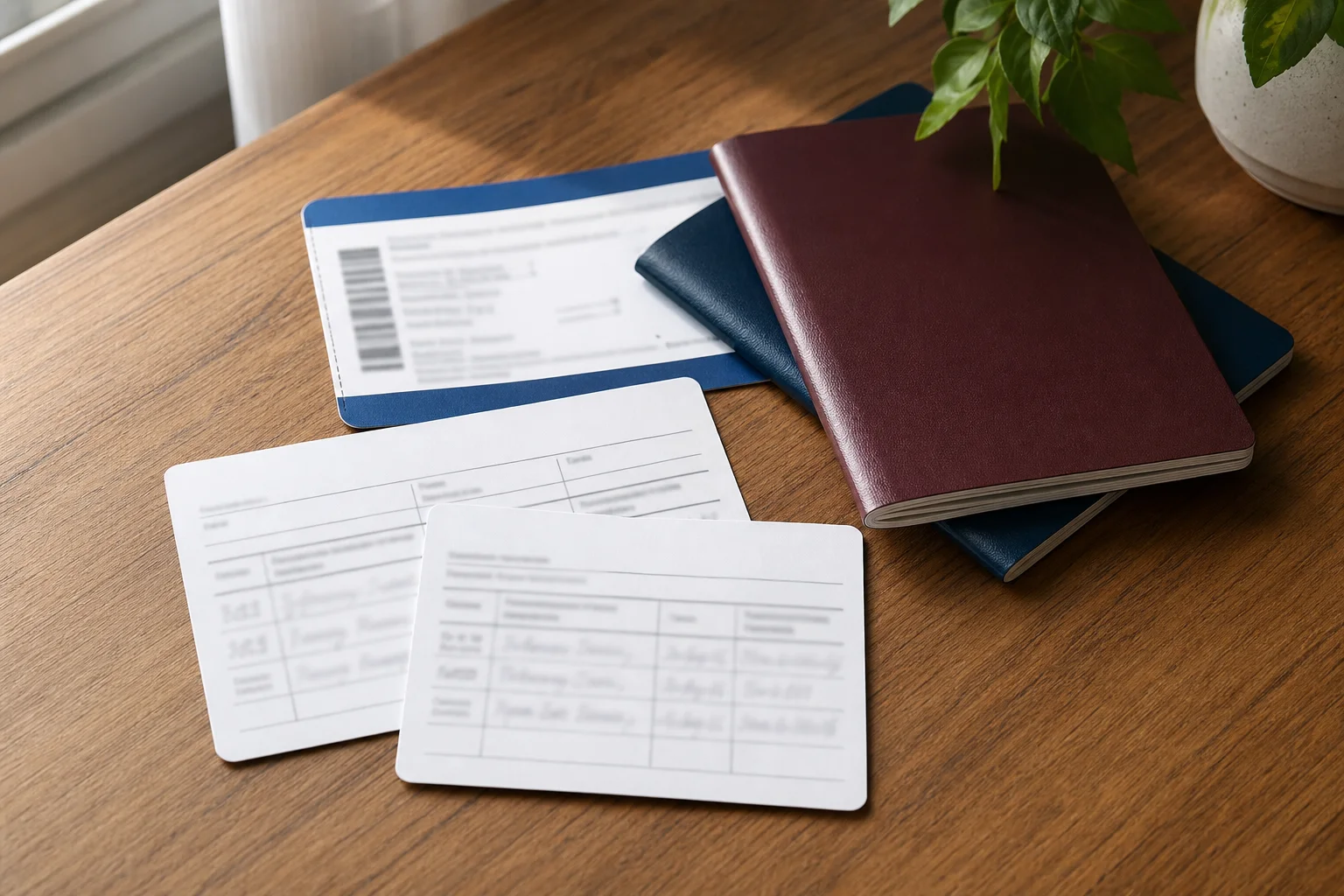
For any traveler receiving a yellow fever vaccine, the destination country may require the International Certificate of Vaccination or Prophylaxis, commonly called the yellow card, which has to be issued by an authorized yellow fever vaccination center and carry that center's official stamp. A regular doctor's office can't issue this, even if it administers the vaccine itself. As group leader, it's worth building a simple checklist so every member's records, and any yellow cards issued during the visit, get copied before you leave the country.
If a team member truly can't find their old records, that's a common situation, not a dead end. We review what they do remember, consider whether titers, blood tests that check existing immunity, make sense for certain vaccines, and rebuild a safe plan from there.
Coordinating Logistics: Different Countries, Late Additions, and Costs
Mission trips don't always send every traveler to the same place. If your team splits into smaller groups heading to different countries, or some members are staying longer in the field while others fly home earlier, say so when you book. Recommendations like malaria prevention or additional destination specific vaccines are assessed by itinerary and length of stay, not by the group as a whole, so flag even one traveler's different itinerary up front.
Team members joining late are common too, whether a last minute addition to a global mission effort or someone who can only get time off closer to departure. The same process applies, just on a tighter runway: call as soon as that person's dates are confirmed so there's still time to reach full protection before they fly.
On cost, we don't publish a single flat rate for mission team vaccines, because the total depends on which vaccines each traveler already has, how many doses are involved, and how many people are in the group. The most useful next step is a call to our office to talk through your roster and get a real estimate.
Who actually pays is a logistics decision, not a medical one. Some sending organizations, whether a church mission board, a program run through The Church of Jesus Christ of Latter-day Saints, the International Mission Board (IMB), or an independent nonprofit, arrange payment for the whole team in advance. Others ask each member to handle their own vaccines. Either way, decide it before the appointment so nobody shows up unsure of the plan.
Frequently Asked Questions
Is it too late to get vaccinated if the mission trip is only a few weeks away?
No. A shorter timeline usually means fewer options, an injectable vaccine instead of a multi dose series, rather than none at all, and partial protection started a few weeks out is still better than none. Call as soon as your travel dates are confirmed and let a travel health specialist tell you what's realistic for your group.
Do all mission team members need the exact same vaccines?
Not necessarily. Each traveler's age, prior vaccination history, and health background factor into the recommendation, even when the whole team is on the same flight. Two members with different histories heading to the same country can leave the consultation with slightly different vaccine plans, and that's normal, not a sign something was missed.
Who pays for mission team vaccinations, the organization or each individual?
That's a logistics decision your group makes, not a medical one. Some sending organizations, whether a church mission board or an independent nonprofit, arrange payment for the whole team in advance. Others ask each traveler to handle their own vaccines. Either approach works clinically, so decide it before the appointment so nobody arrives unsure of the plan.
What happens if a team member can't find their old vaccination records?
It's a common situation, not a dead end. We review what the traveler does remember, consider whether titers, blood tests that check existing immunity, make sense for certain vaccines, and rebuild a safe plan from there. Missing records slow things down slightly, which is one more reason to book early.
Get Your Mission Team Protected Before You Fly
Booking vaccines for a mission team goes smoother with more lead time and one clear point of contact, so reach out as soon as your roster and travel dates are set. Schedule an Appointment for your group or find directions at our Scottsdale Travel Clinic.
